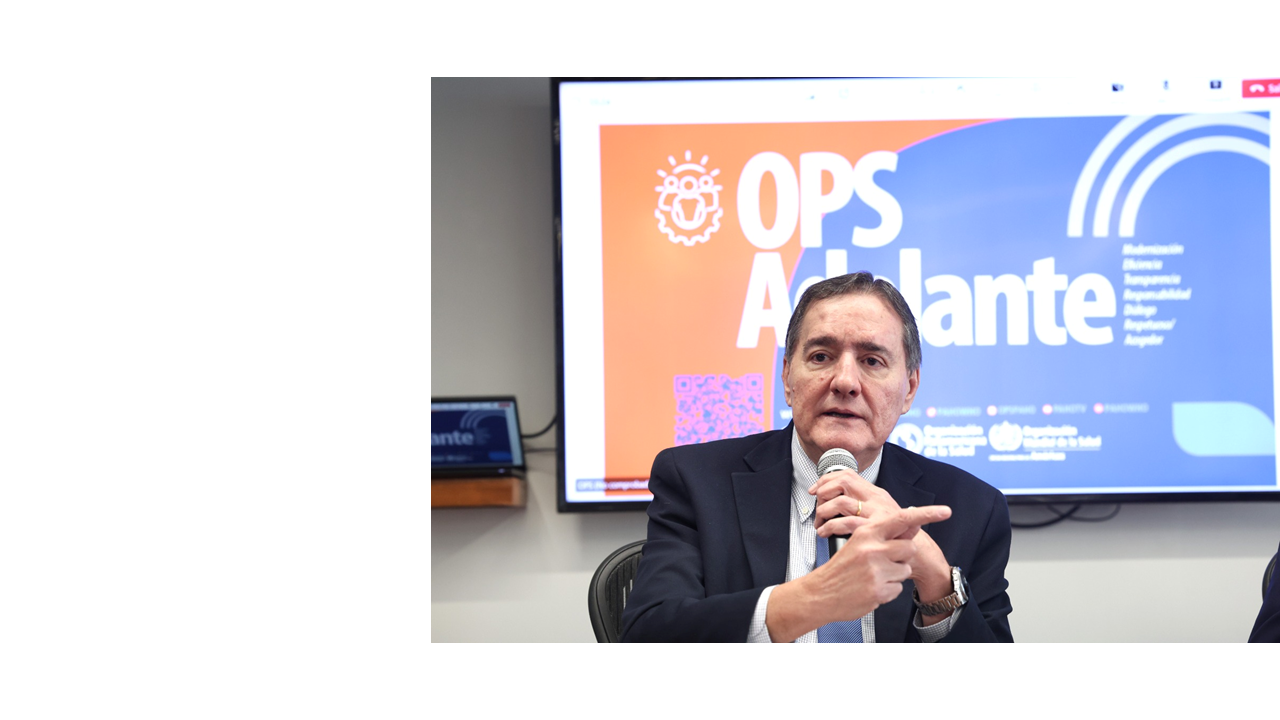
Making evaluation findings public is central to PAHO’s accountability to its Member States, showing how the Organization assesses its work and uses recommendations to learn and improve. Evaluation evidence and updates on the implementation of recommendations are regularly shared through PAHO’s Governing Bodies, including the Directing Council and the Subcommittee on Program, Budget, and Administration, as well as through targeted briefings led by Executive Management. These engagements strengthen oversight, support evidence-informed deliberations, and reinforce evaluation as a trusted source of independent analysis.
PAHO also regularly engages with donors and partners by sharing evaluation findings, country case studies, and updates on how recommendations are being implemented in major initiatives. This ongoing dialogue helps build shared understanding, supports learning, and strengthens confidence in PAHO’s technical cooperation.
PAHO’s Evaluation function contributes to and benefits from system-wide evaluation learning and visibility. PAHO collaborates closely with WHO Evaluation through participation in corporate evaluations, methodological exchanges, and quality assurance initiatives. PAHO is also actively engaged with the United Nations Evaluation Group (UNEG), contributing to multiple workstreams and global learning efforts, and supporting UN system-wide synthesis and assessment processes, such as the Sustainable Development Goals (SDGs) Synthesis Coalition.
Transparency is at the heart of PAHO’s evaluation practice. In line with the Evaluation Policy and its 2025 revision, PAHO publishes all external corporate evaluation reports and supports their dissemination through concise, accessible communication products. Evaluation content, including reports, executive summaries, briefs, educational videos, and selected synthesis products, is increasingly available in both English and Spanish, expanding access for stakeholders across the Region. These efforts help ensure that evaluation evidence is visible, reliable, and ready to inform dialogue, accountability, and continuous improvement.
Case Study Series
Case studies systematically and thoroughly examine a specific experience, intervention, or context to generate evidence on how and why the results of a program, project, or policy are produced, considering implementation, context, and actors, and provide input for the analysis of evaluation criteria.
In 2025, PAHO developed this innovative publication series and launched it in 2026, turning evaluation findings into actionable knowledge products.
Annual Report on Evaluation
This institutional document concisely and strategically presents the main results, lessons learned, and emerging trends from evaluations conducted throughout the year, as well as the Evaluation team's activities. Its purpose is to strengthen accountability and inform evidence-based decision-making, clearly demonstrating how evaluation improves the performance, quality, and impact of programmes, projects, and policies.

Scientific papers and knowledge management products
PAHO's Evaluation function advances its role as a catalyst for learning and accountability by developing synthesis and thematic papers that consolidate evidence from corporate and decentralized evaluations. These manuscripts go beyond reporting results: they transform evaluation findings into scientific knowledge, documenting experiences, lessons learned, and the tangible contributions of evaluation to public health strengthening.
Designed as high-value knowledge management products, the papers aim to inform decision-making and foster a culture of evidence use, and are thought to be published in an indexed journal.