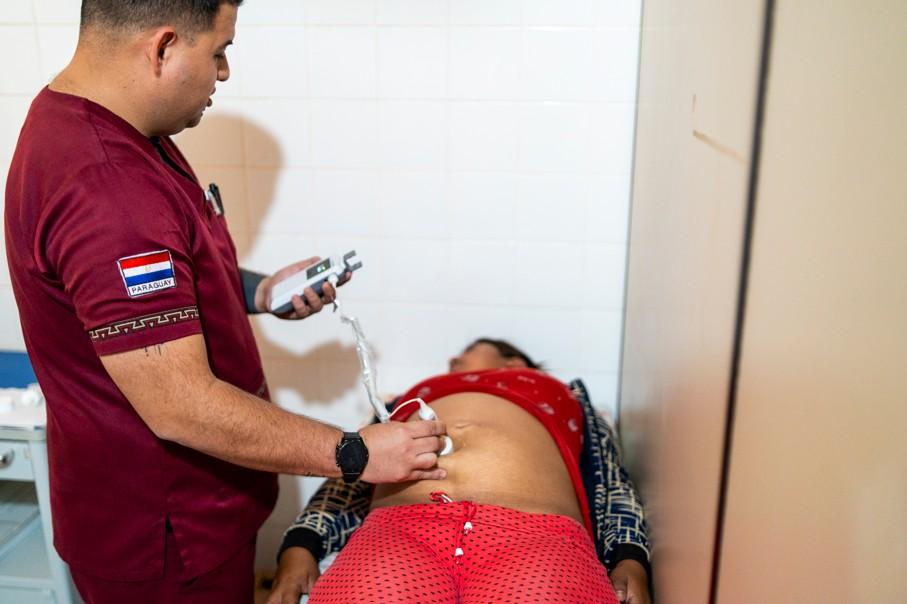
With strategic support from PAHO, Paraguay consolidated a territorial model of intercultural care oriented toward Indigenous communities, dispersed rural populations, and border populations.
Technical cooperation contributed to the design and implementation of a comprehensive approach that incorporated community-based care, active case-finding, strengthened roles for community health workers, and mechanisms for social participation. PAHO supported training processes for health personnel and the integration of intercultural and human rights–based approaches into service delivery, thereby reducing cultural, linguistic, geographic, and economic barriers to access.
Key partners included local governments and community- and Indigenous-led organizations from the Paraguayan Chaco and the Canindeyú regions. PAHO, together with the India–United Nations Development Partnership Fund, the United Nations system, and the Universal Health Coverage Partnership, added strategic value by guiding the design and implementation of the model, supporting health workforce training plans, and facilitating evidence-based community participation methodologies.
As a result, access to maternal, neonatal, and family health services was expanded, improving cultural relevance and non-discrimination. The model, grounded in intercultural and rights-based approaches and supported by evidence and intersectoral partnerships, provides a solid foundation for scale-up and contributes to better health outcomes among populations that historically faced conditions of vulnerability.
Photo caption: Prenatal care for a woman from the Nivacle Indigenous group in the municipality of Boquerón, Boquerón Department, Chaco.
Credit: PAHO/Bruno Ferreiro.