During the 2024–2025 biennium, the Dominican Republic consolidated sustained progress toward the elimination of priority communicable diseases by strengthening its strategic approach and progressively aligning with the Disease Elimination Initiative.
With technical cooperation from PAHO, the country has maintained the elimination of vaccine-preventable diseases such as measles, rubella, congenital rubella syndrome, poliomyelitis, and neonatal tetanus. In addition, the Ministry of Health and Social Protection expanded the national immunization schedule by incorporating two new vaccines and introducing HPV vaccination for children, and modernized its cold chain with equipment prequalified in keeping with internationally accepted standards. Vaccines and equipment were acquired through the Regional Revolving Funds.
As part of the elimination strategy, the country made progress in prioritizing diseases and defining its national road map, identifying favorable technical, programmatic, and operational conditions for the elimination of lymphatic filariasis, schistosomiasis, yaws, and mother-to-child transmission of hepatitis B. National technical capacities were strengthened to accelerate progress toward the elimination of other diseases such as HIV, tuberculosis, cervical cancer, and mother-to-child transmission of HIV and hepatitis.
Regarding malaria, the country strengthened elimination efforts by implementing the detection and diagnosis, treatment, investigation, and response (DTIR) strategy, achieving 82% of the indicators in the first measurement of the Regional Malaria Elimination Initiative’s performance framework. These actions were developed in coordination with strategic partners such as the Clinton Foundation, the Carter Center, and the Regional Malaria Elimination Initiative.
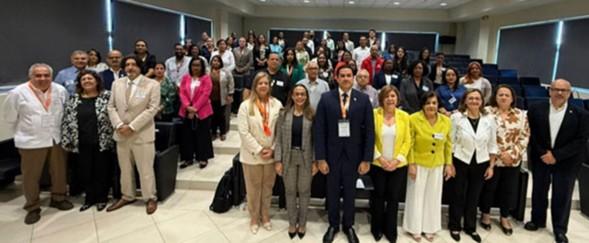
Photo caption: Meeting for the development of the national road map toward the elimination of communicable diseases and related conditions.
Credit: PAHO