During the 2024–2025 biennium, Peru strengthened the national capacities of its health system for preparedness, response, and resilience in the face of health emergencies, humanitarian crises, and displaced populations, with a cross-cutting emphasis on health for all, a migration-focused approach, and the protection of populations in situations of vulnerability.
PAHO supported the updating of the health situation analysis with a migration focus and the strengthening of health personnel's capacities for specialized care for NCDs, tuberculosis, and toxicological events, contributing to improved continuity of care and the operational preparedness of the system in complex scenarios. In parallel, the humanitarian response was reinforced through the strategic distribution of essential supplies (nearly 30 000 humanitarian kits) and the generation of evidence to guide local governance in addressing xenophobia and stigma in access to services. Furthermore, PAHO promoted an intersectoral approach to chemical emergency preparedness, strengthening coordination among the health sector, civil protection systems, emergency services, academia, and the private sector.
These actions expanded the country’s capacity to respond promptly and in a coordinated manner to emergencies, including chemical incidents and mass poisoning events, thereby consolidating enabling conditions for a more resilient and integrated response to emergencies of diverse origins.
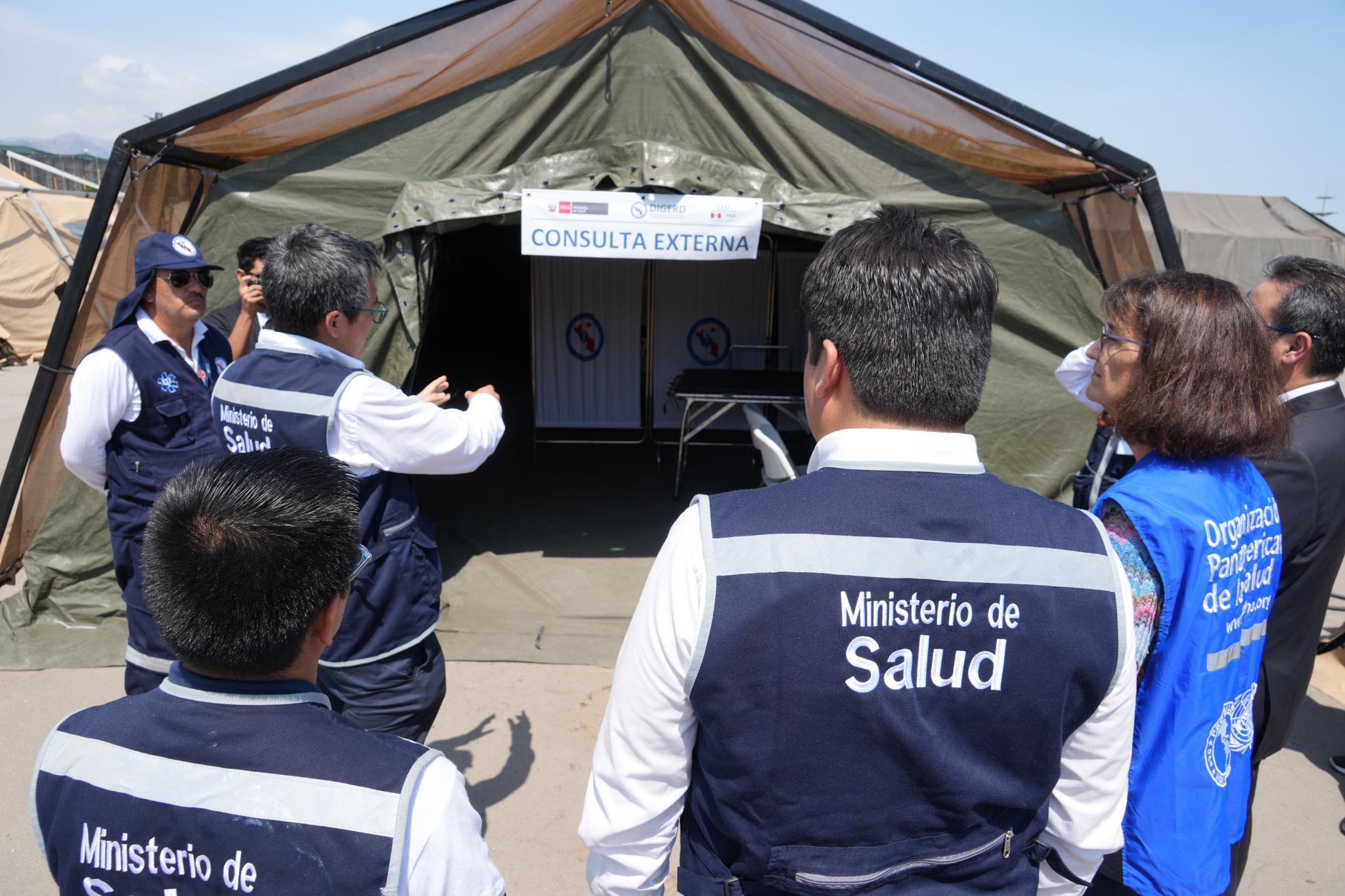
Photo caption: Authorities from the Ministry of Health and PAHO/WHO visit Emergency Medical Team (EMT) training.
Credit: OPS – Luz Rospigliosi