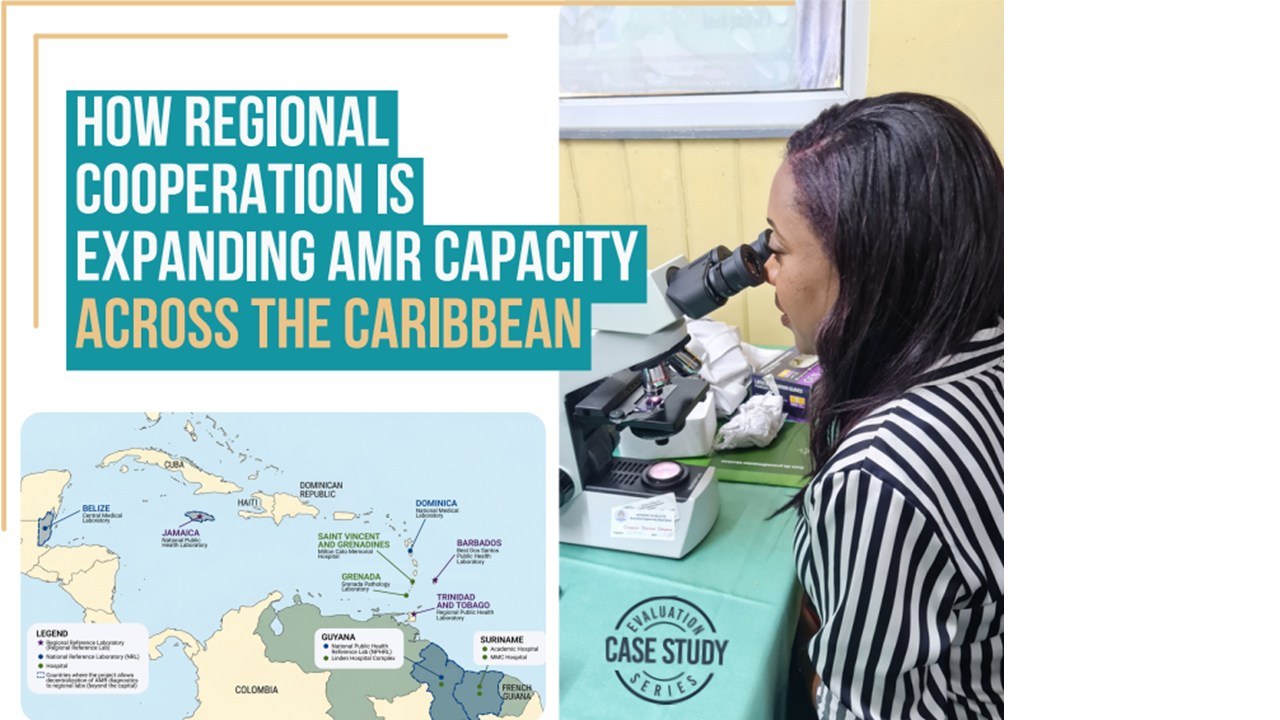
Across the Caribbean, strengthening antimicrobial resistance (AMR) surveillance is increasingly becoming a shared regional endeavor. As countries face common challenges related to workforce shortages, specialized expertise, laboratory sustainability, and data systems, regional cooperation has emerged as a practical and effective pathway to build capacity beyond what individual institutions can achieve alone. Through examples from across the region, this case study highlights how reference laboratories, technical networks, communities of practice, and strategic partnerships are helping create regional public goods that strengthen surveillance, promote knowledge exchange, and support more sustainable health systems. It offers valuable lessons on how collaboration advances resilient, interconnected AMR responses in small island and resource-constrained settings.
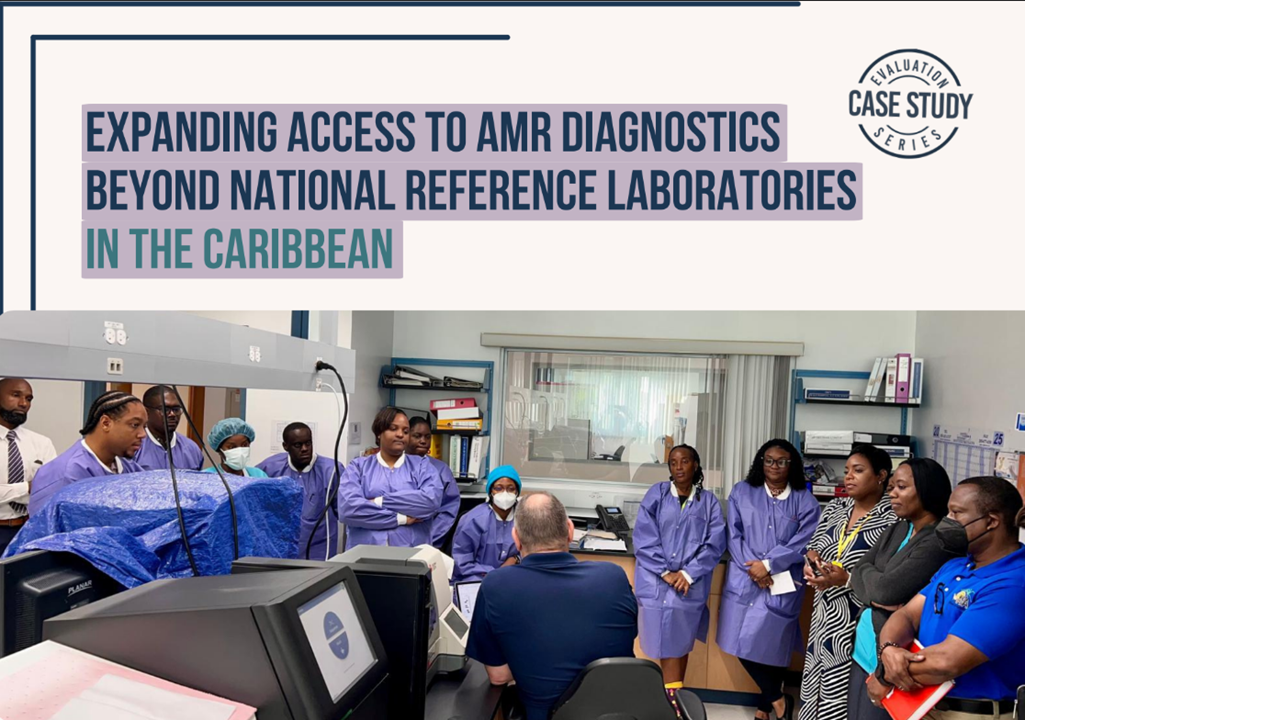
Timely access to quality diagnostics is a cornerstone of effective antimicrobial resistance (AMR) surveillance, yet geography continues to shape access to laboratory services across many Caribbean countries. This publication explores how investments in laboratory strengthening are extending diagnostic capacity beyond national reference laboratories and bringing essential services closer to the communities and health professionals who rely on them. Drawing on experiences from several countries, it illustrates how decentralization, workforce development, upgraded technologies, and stronger laboratory networks can improve equity, accelerate clinical decision-making, and expand surveillance coverage. At the same time, it highlights the systems, partnerships, and long-term investments needed to ensure that expanded diagnostic access translates into sustainable public health outcomes.