During the 2024–2025 biennium, Peru took significant steps to consolidate an approach that recognizes the interconnectedness of human, animal, and environmental health through targeted interventions in priority departments, with the aim of improving coordination among national, intermediate, and local levels to address infections related to poverty conditions.
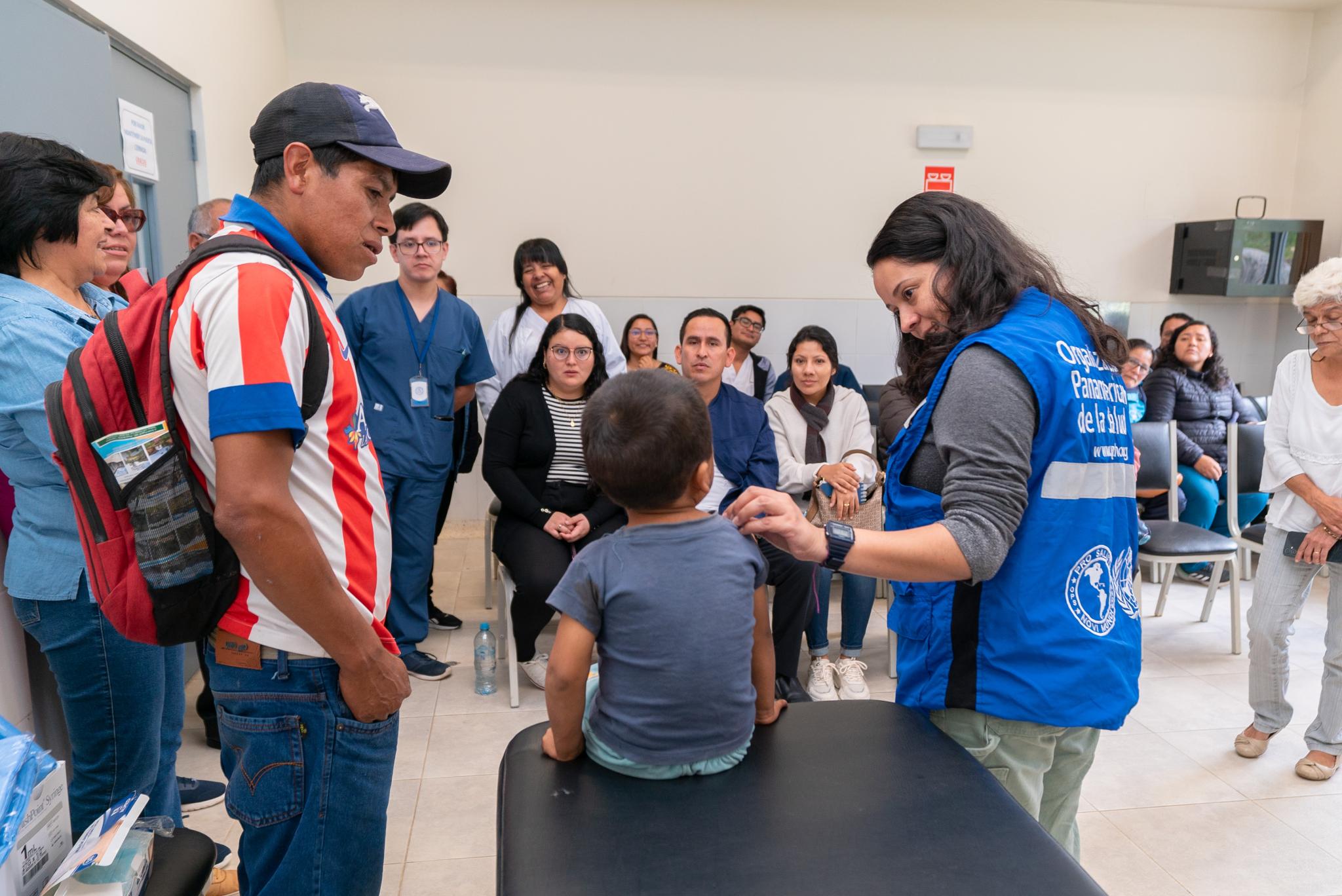
PAHO provided technical cooperation focused on supporting decentralized implementation models in Junín and Cajamarca departments, aligning territorial priorities with national strategies to advance both the elimination of hydatid disease in Junín and the introduction of evidence-based protocols for oral treatment and effective management of severe cases of cutaneous leishmaniasis in vulnerable children in Cajamarca. The approach strengthened local technical capacity and intersectoral coordination in contexts with a high burden of neglected diseases.
These advances helped to institutionalize the approach as an operational platform for the national response to communicable diseases associated with social determinants, thereby strengthening multilevel governance, evidence-based decision-making, and the sustainability of interventions aimed at reducing health gaps at the territorial level.
Photo caption: The case of a pediatric patient with leishmaniasis on the face is reviewed during health personnel training in the province of Cajabamba in Peru’s Cajamarca region
Credit: OPS – Raul Cartagena