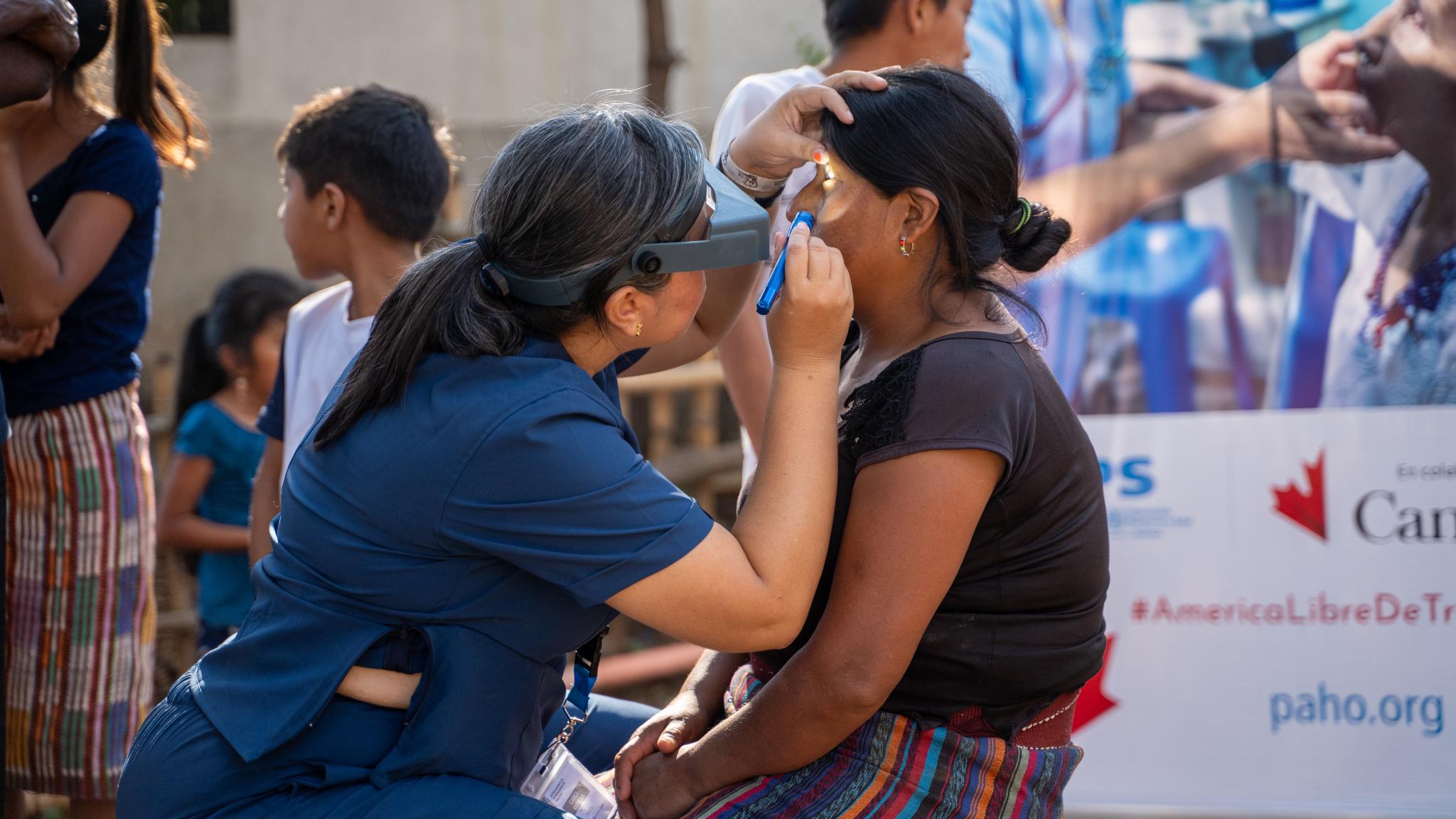
During the 2024–2025 biennium, PAHO provided substantial support to bolster Guatemala’s progress toward the elimination of trachoma as a public health problem, through the strengthening of epidemiological surveillance, community action, and interprogrammatic integration. With support from Canada, the country implemented prevalence surveys among children aged 1–9 years in the communities of Quetzal (San Marcos) and Guineales (Sololá), covering 60 clusters and documenting a prevalence of 0.3%, well below the internationally accepted 5% threshold to define elimination. These results provide robust evidence of the progress achieved and strengthen national capacity to document and sustain elimination gains.
In parallel, PAHO facilitated the development of graphic materials, science based methodologies, and logistical support for the implementation of knowledge dialogues in Xejuyup, focused on the facial cleanliness and environmental improvement components of the SAFE strategy (Surgery, Antibiotic, Face cleanliness and Environmental improvement). Coordination with the disability program enabled the participation of local personnel as surveyors, strengthening case detection and treatment, while the articulated work among the health and education sectors, communities, and ancestral leaders consolidated an intercultural and territorially grounded approach.
This achievement advances the elimination of trachoma and strengthens local and institutional capacities, demonstrating a replicable model for the elimination of other communicable diseases that disproportionately affect populations in situations of vulnerability.
Decisive progress made toward the elimination of trachoma in Guatemala