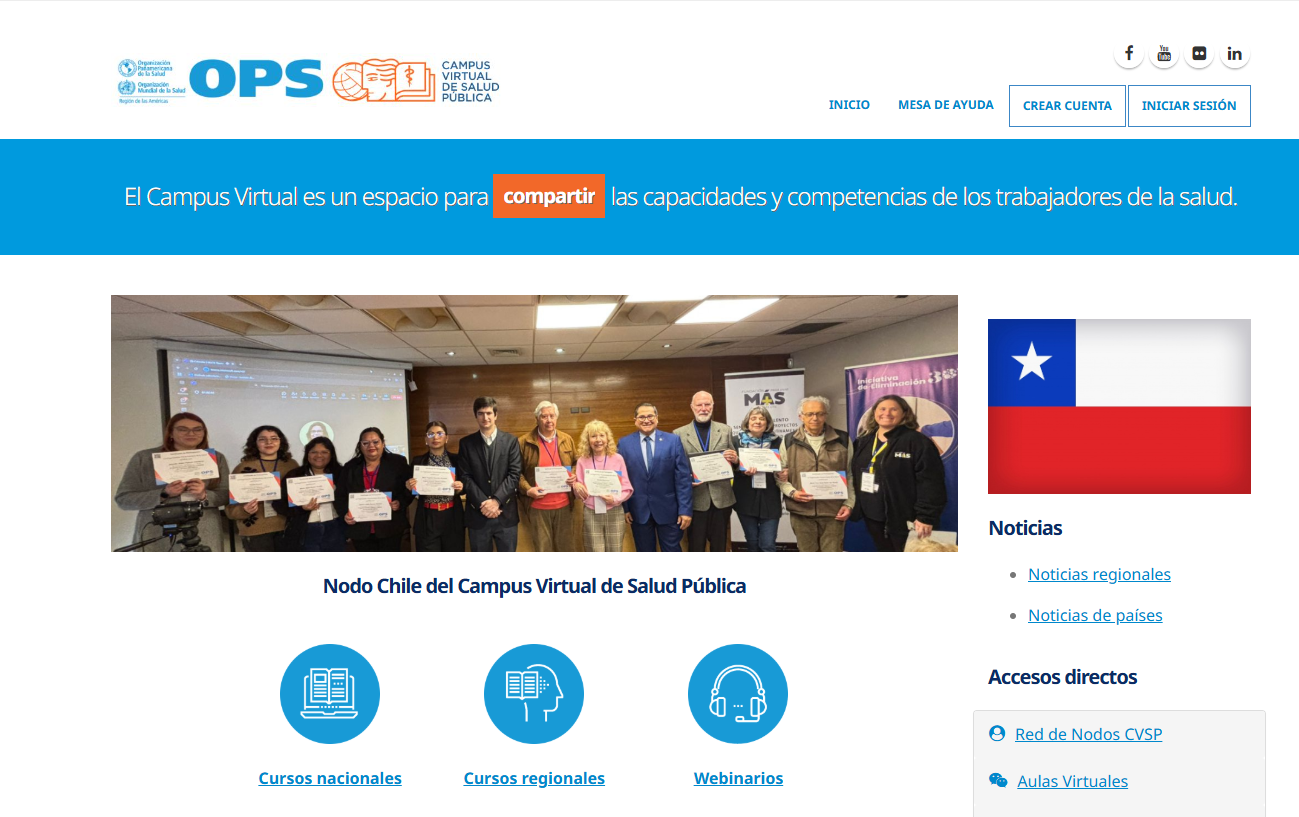
During the 2024–2025 biennium, PAHO contributed to strengthening Chile’s digital health ecosystem through technical support for semantic standardization, interoperability, and the strategic use of information systems oriented toward clinical management and public health surveillance.
The cooperation included the adoption and adaptation of key tools (ICD-11, DHIS2, and Go.Data), as well as the strengthening of national capacities in telemedicine and digital health, including the identification of equipment needs and coordination with available procurement and supply mechanisms. These actions contributed to improving the quality, timeliness, and use of data, enabling interoperable flows for waiting list management, surveillance of severe acute respiratory infections, and monitoring of adverse events following immunization (AEFIs). In addition, the strengthening of the PAHO Virtual Campus for Public Health supported the continuous training of health personnel and consolidated the use of digital platforms as enablers of system transformation. Furthermore, an interagency project was promoted in the regions of Ñuble and La Araucanía to strengthen access to telemedicine and conventional services through strategic equipment and connectivity, with potential for replication through South–South cooperation.
As a result, Chile strengthened its public health intelligence capacity to integrate information across levels of care and support timelier, evidence-based responses. This achievement contributes to improving system efficiency, continuity of care, and increased access, reinforcing the country’s capacity to address current and emerging health challenges.
Photo caption: Strengthening of Chile’s digital health ecosystem through standardization, interoperability, and the adoption of key tools for clinical management and public health surveillance.
Credit: PAHO Chile