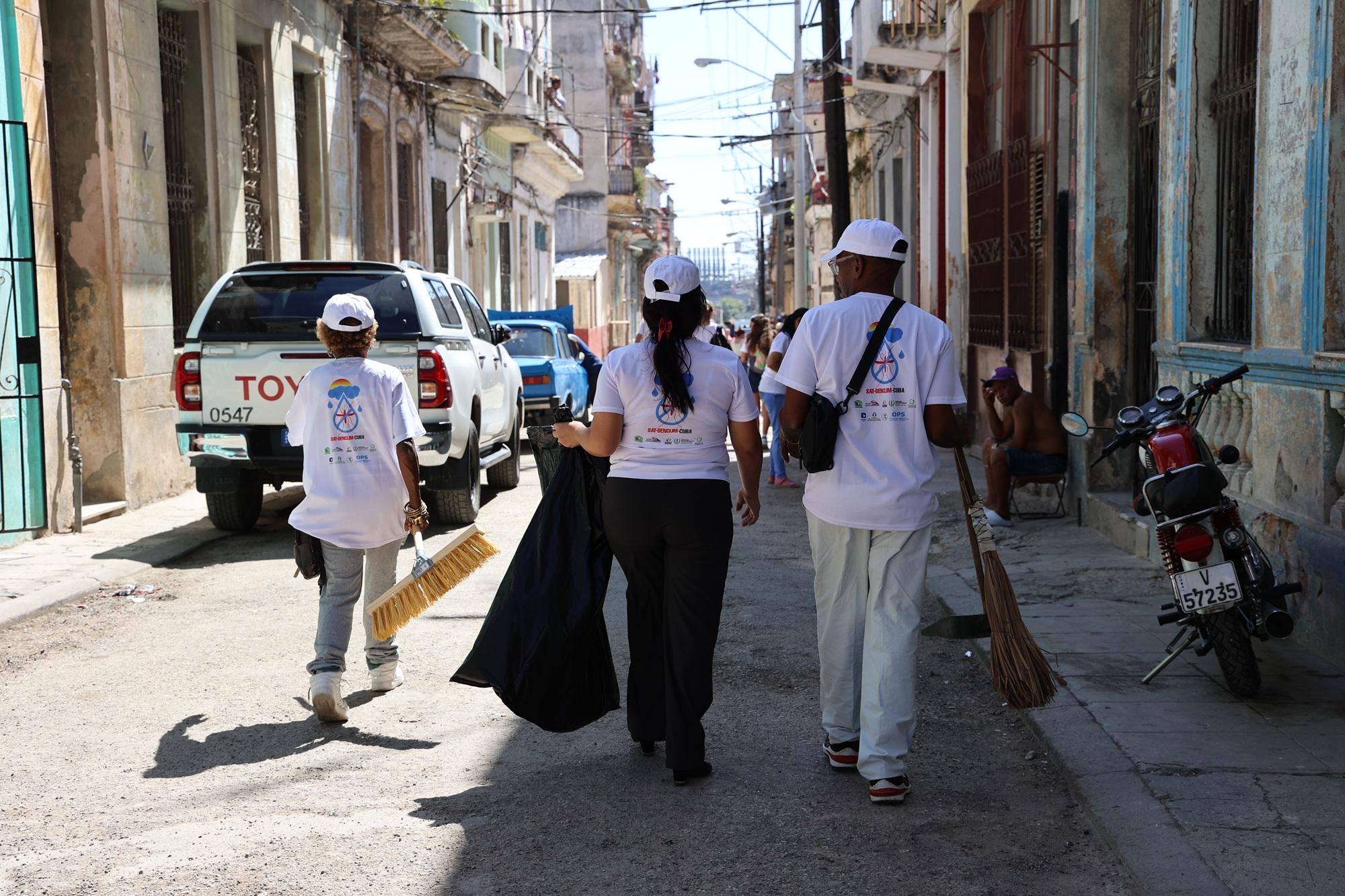
During the 2024–2025 biennium, Cuba made significant progress in the implementation of an approach that recognizes the interconnectedness of human, animal, and environmental health, supported by a national government project structured around eight priority lines of action, including zoonoses, antimicrobial resistance, surveillance, food safety, and communication. A particularly noteworthy result was the development of a climate‑sensitive early warning system for dengue and its vector, serving as a model for intersectoral integration.
PAHO contributed through specialized technical advice for the design of the tool, the development of training programs, the preparation of guidance to strengthen surveillance, and support for intersectoral coordination. The system integrates climatic, satellite, epidemiological, entomological, and socioeconomic information to generate timely alerts for decision makers and communities, thereby strengthening response and adaptive capacity in the context of climate change.
This achievement reinforces dengue prevention and control, improves evidence‑based decision‑making, and strengthens community resilience. In the longer term, consolidation of an integrated approach contributes to reducing complex health risks, improving the sustainability of responses, and advancing toward more integrated and better‑prepared health systems in the face of emerging threats.
Photo caption: Rollout of an early warning system for dengue
Early warning system for dengue implemented