PAHO significantly strengthened Guyana’s health workforce pipeline by supporting the completion of a new three year hybrid nursing curriculum for registered nurses, developed in collaboration with the Ribeirão Preto School of Nursing, University of São Paulo.
This reform represents a systemic response to Guyana’s chronic shortage of professional nurses and aligns with national priorities on workforce availability and distribution. PAHO provided sustained technical leadership throughout the curriculum review and redesign process, ensuring that the program met international educational standards while remaining responsive to local service delivery needs. The hybrid model expands access to high quality nursing education by combining in person and distance learning modalities, thereby reducing geographic and logistical barriers for students across the country. The in-person modalities have been expanded to simulation and clinical sites across the country, and not just in Georgetown as was the case previously. In addition, PAHO facilitated additional financial support from Canada, strengthening the sustainability and scale of the initiative. The revised curriculum is expected to dramatically increase the number of trained nurses entering the health system in the medium term, with a projected expansion in enrollment and graduation compared to the previous training model.
By strengthening the competence, availability, and distribution of nursing personnel, this achievement directly contributes to improved service coverage, quality of care, and continuity across primary and hospital services. A stronger nursing workforce will enhance Guyana’s capacity to deliver essential services, respond to population health needs, and sustain progress toward health for all.
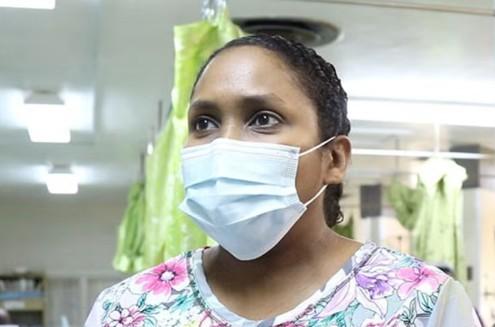
Photo caption: Registered nurse at the Eric Williams Medial Sciences Complex
Credit: PAHO Guyana