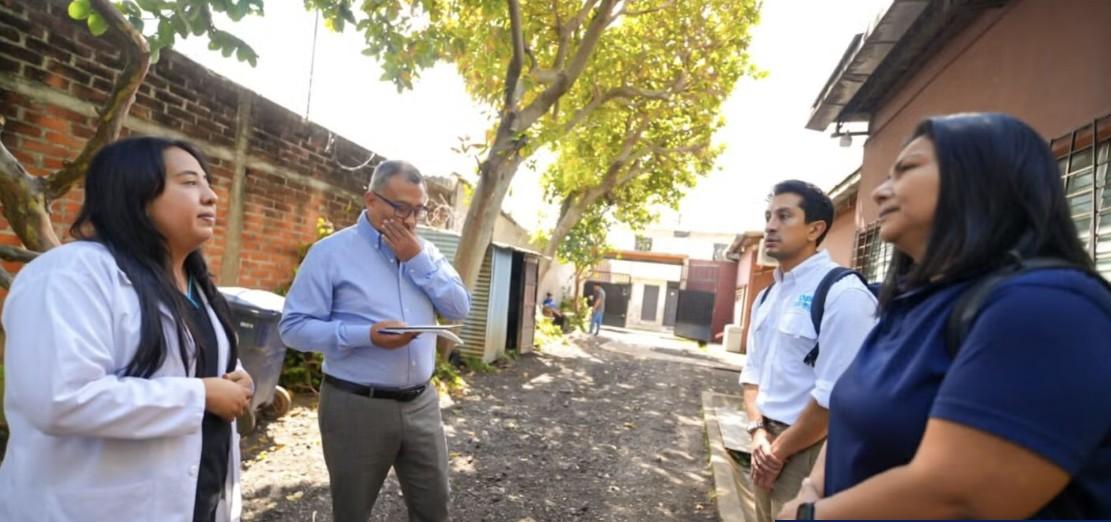
In El Salvador, intersectoral action on the social and environmental determinants of health was institutionalized at the territorial level, driving a structural shift in the participation of local governments through the Healthy Municipalities, Cities and Communities Movement.
Through the design and implementation of a technical support model, the Organization facilitated the formal adoption and operationalization of the initiative, enabling the country to launch it nationwide and to incorporate 8 municipalities into a subnational network covering more than 30% of the national population. Technical cooperation included awareness-raising and advocacy with municipal authorities, adaptation of accession criteria, support for the formulation of action plans, and strengthening of local governance mechanisms.
In parallel, technical capacities were strengthened through the implementation of the Water and Sanitation for Health Facility Improvement Tool (WASH FIT) in 13 health facilities and training programs on social determinants of health, reaching more than 150 health sector officials and mainstreaming a health for all approach across interventions.
These advances strengthen intersectoral planning, improve living conditions, and create healthier environments, contributing to sustained health impacts and helping to reduce disparities.
Photo caption: The Healthy Municipalities, Cities and Communities Movement arrives in Santa Ana Centro
Credit: PAHO - Nubia Carbajal
Intersectoral action on social and environmental determinants institutionalized at the territorial level