During the 2024–2025 biennium, Honduras achieved a substantial reduction in maternal mortality, declining from 65 maternal deaths per 100,000 live births in 2023 to 38 in 2025—a reduction of 41.5%. This progress was driven by an integrated territorial response that strengthened the clinical, operational, and logistical capacity of the health system, particularly in higher risk settings. PAHO made a critical contribution by translating normative and financial decisions into concrete operational improvements for emergency obstetric care and for the continuity of maternal and neonatal health services in prioritized territories.
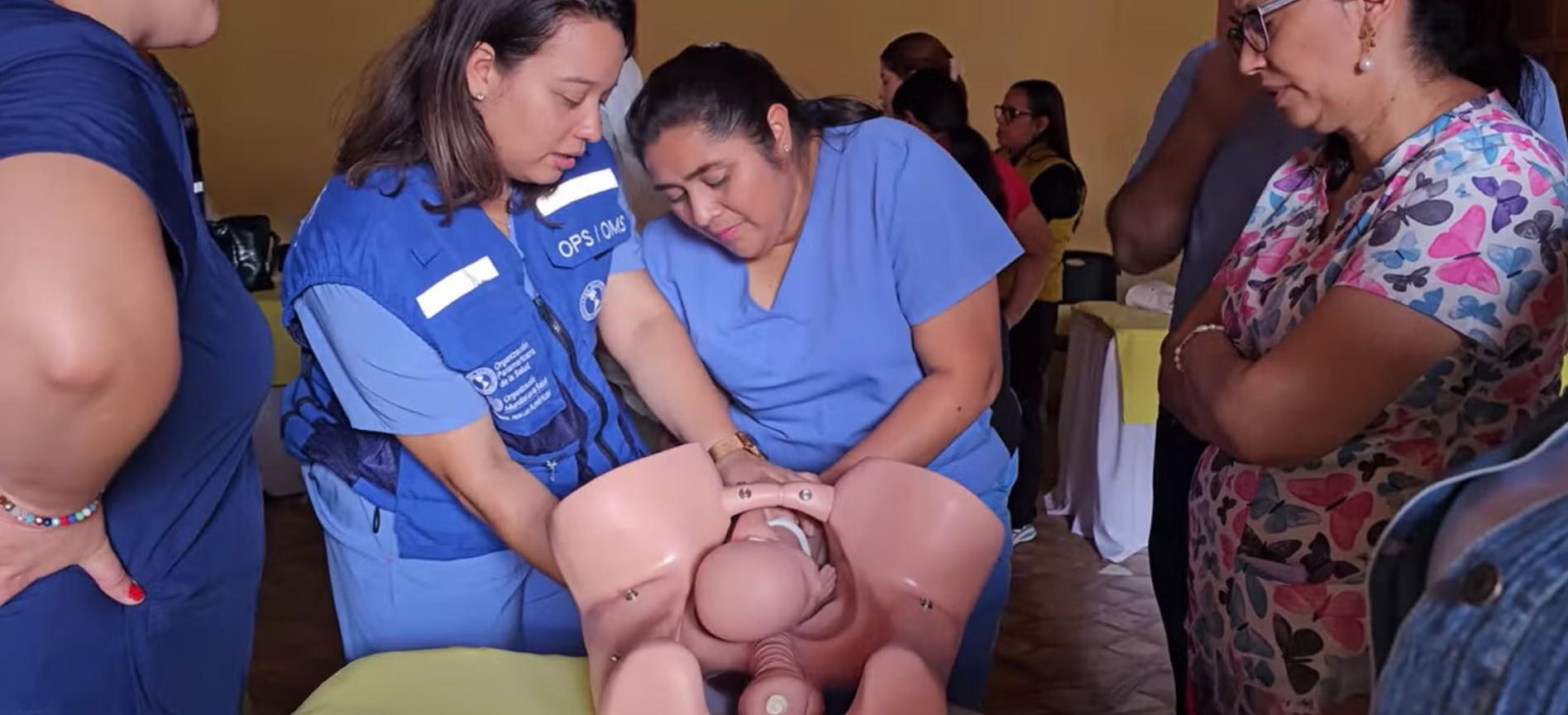
PAHO also added value by supporting the updating and effective adoption of maternal health regulations, the sequencing of their implementation, and the strengthening of clinical capacities through simulation centers, Zero Maternal Deaths teams, and maternal death surveillance and review methodologies. The integration of territorial analytics – through the georeferencing of 70 integrated health services networks and maternal mortality – made it possible to target interventions, improve the timeliness of referrals, and strengthen community linkages for the early identification of risks.
In parallel, PAHO worked with the Secretariat of Health to ensure the effective availability of critical health technologies to support the clinical response. Essential services for emergencies and maternal and neonatal care were strengthened through procurements financed with more than USD 47 million in national voluntary contributions, executed through the PAHO Strategic Fund. Technical specifications, procurement processes, and quality control and traceability were supported, enabling the incorporation of 14 ambulances and 2459 key medical devices for maternal and neonatal care and emergency response.
Taken together, the combination of strengthened clinical capacity, the availability of health technologies, and an evidence based territorial response made it possible to translate investments and regulations into tangible results, contributing directly to the reduction of maternal deaths and strengthening health system resilience. This approach generated efficiencies for the national budget, strengthened institutional confidence in regional procurement mechanisms, and helped build sustainable procurement capacity for the future.
Photo caption: Code red – Zero Maternal Deaths teams in action
Maternal mortality reduction accelerated through territorial capacity-building and strategic procurement