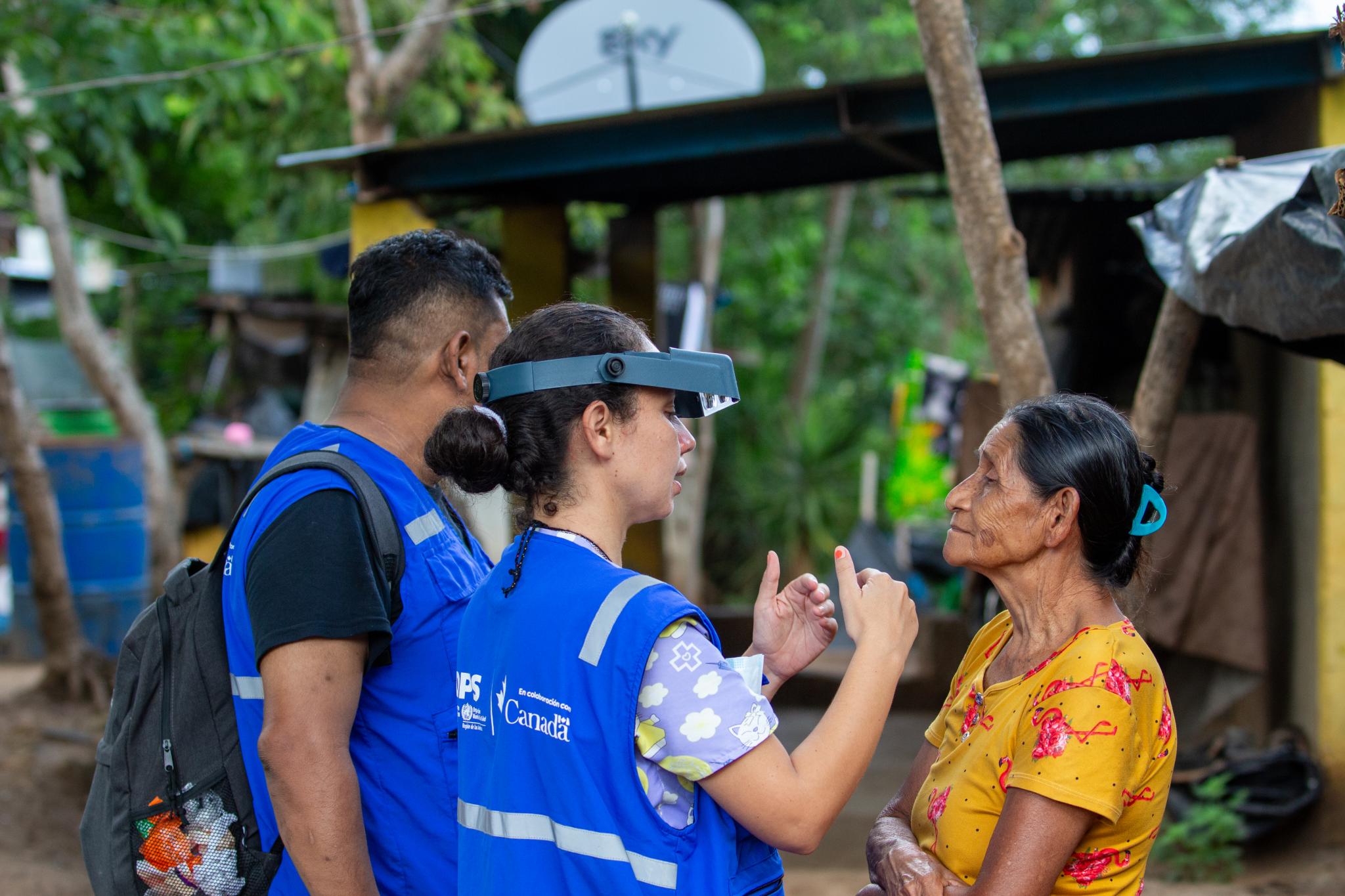
During the 2024–2025 biennium, the Ministry of Health of El Salvador (MINSAL), with technical support from PAHO, made substantive progress toward the elimination and control of communicable diseases, in alignment with the Disease Elimination Initiative.
PAHO provided strategic technical cooperation to strengthen governance, surveillance, diagnostics, and the planning of sustainable interventions while promoting effective interprogrammatic and intersectoral coordination. As a result, the country strengthened its national strategy to defeat meningitis by 2030, completed rapid trachoma assessments and advanced toward its elimination, validated the digital record for pregnant women living with HIV as a key tool for the elimination of mother-to-child transmission, and officially adopted a national plan for antimicrobial resistance 2025–2030 under an approach recognizing the interconnectedness of human, animal, and environmental health.
These achievements reflect a fundamental strengthening of the health system’s capacity to prevent, detect, and respond to communicable diseases, with particular emphasis on populations in situations of vulnerability and on the sustainability of results. PAHO’s cooperation included normative guidance, capacity-strengthening at the national level, and coordination with strategic partners such as UNICEF and UNAIDS, with the support of the Government of Canada, enabling the translation of technical recommendations into national policies and plans.
Collectively, these advances have contributed to reducing the burden of communicable diseases, safeguarding elimination gains, and moving toward sustained health impacts for the population of El Salvador.
Photo caption: Searching for trachoma cases in the district of Tacuba.
Credit: PAHO
Notable progress made toward the elimination of priority communicable diseases