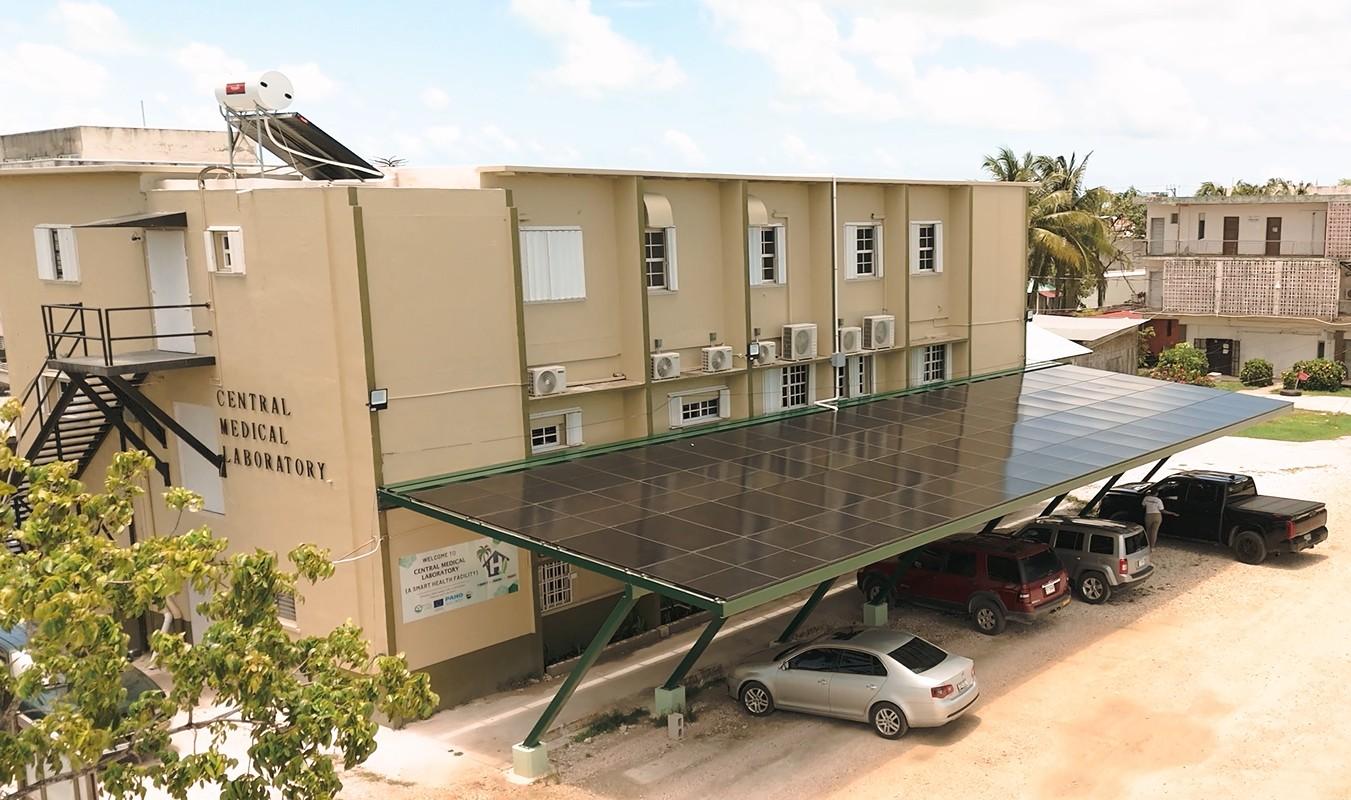
During the 2024–2025 biennium, PAHO strengthened Belize’s preparedness for pandemic influenza and other high‑impact health emergencies by enhancing climate‑resilient health infrastructure and laboratory capacity. In collaboration with the European Union, PAHO supported the SMART retrofitting and greening of five health facilities and the Central Medical Laboratory (CML), including the installation of solar photovoltaics systems, to improve disaster readiness and ensure continuity of essential services during emergencies. The complete retrofitting of the CML, together with the provision of new diagnostic equipment, reagents, supplies, and specialized training, enabled it to meet international biosafety and quality standards, significantly strengthening national capacity for early detection and response to influenza and other priority public health threats, and positioning it for designation as a national influenza center.
Complementing these infrastructure investments, PAHO provided technical cooperation to the MoHW to strengthen national capacities in risk communication and community engagement (RCCE) and knowledge translation, with a focus on pandemic influenza preparedness. Targeted training enhanced the country’s ability to communicate effectively before, during, and after health emergencies, resulting in the development of a draft national RCCE plan that reinforces community‑centered communication as a core pillar of emergency preparedness.
Together, these interventions strengthened Belize’s public health readiness and resilience in the face of epidemics, pandemics, and climate‑related disasters by supporting timely detection, coordinated response, and sustained public trust during health emergencies.
Photo caption: The newly retrofitted Central Medical Laboratory with safe and green initiatives, including a solar photovoltaic system
Credit: PAHO