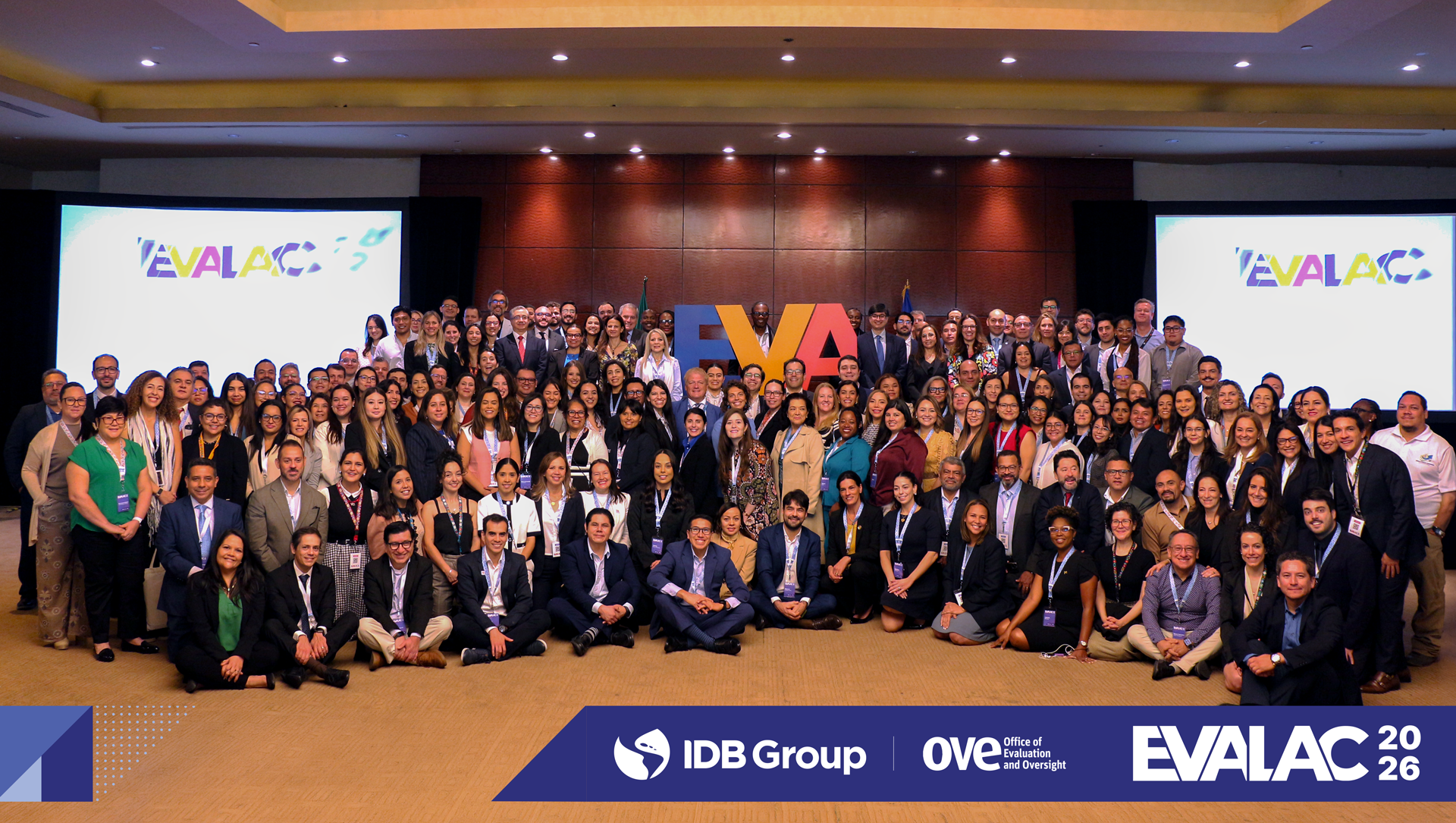
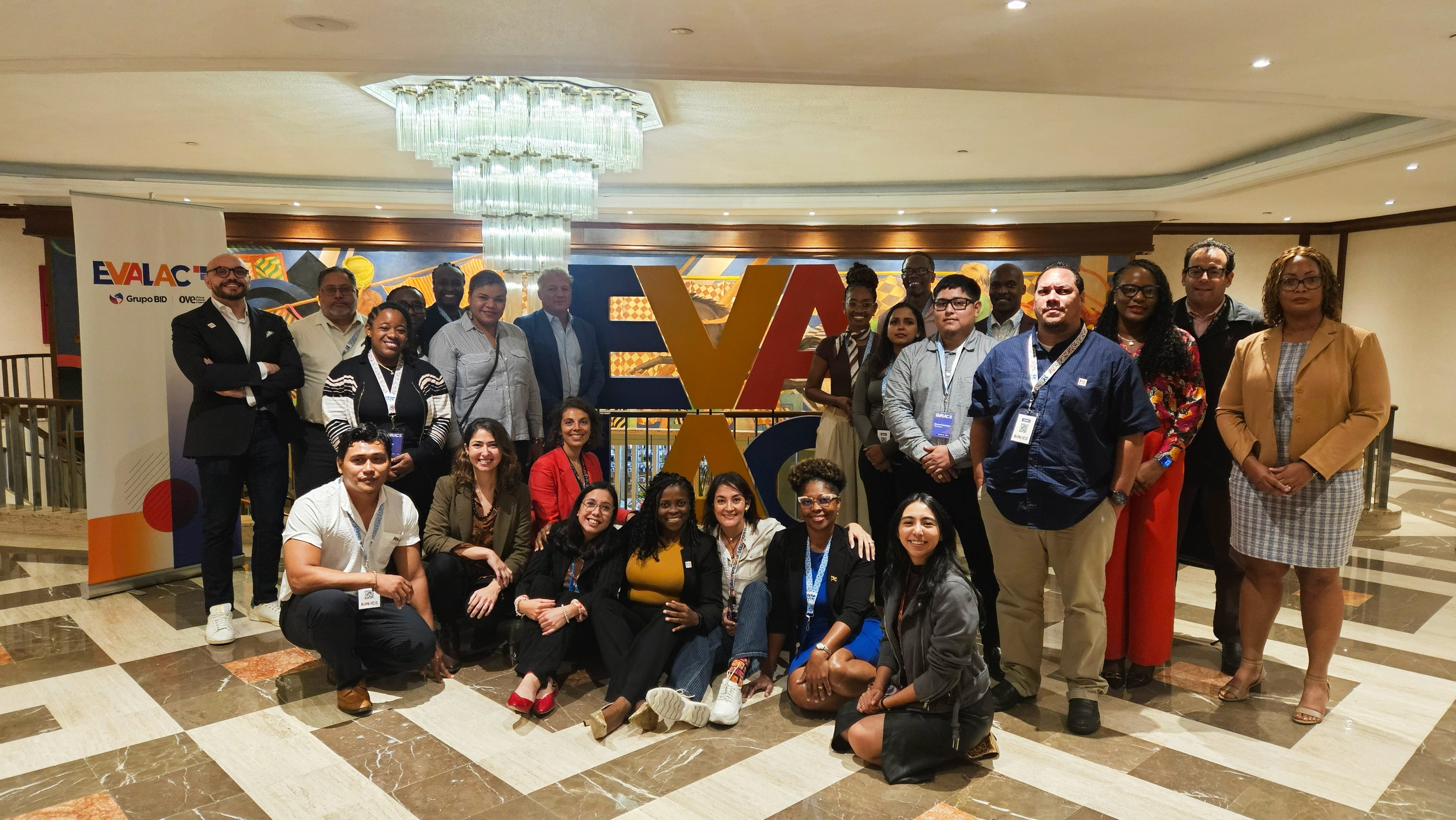
In September 2026, PAHO participated in EVALAC 2026 for the first time, joining more than 150 public officials, evaluation practitioners, and development partners from 24 countries across Latin America and the Caribbean in one of the region's leading initiatives for strengthening monitoring and evaluation (M&E) systems. EVALAC is jointly organized by the Inter-American Development Bank Office of Evaluation and Oversight (OVE) and CLEAR-LAC and brings together national institutions, development partners, and evaluation professionals committed to advancing evidence-informed public decision-making.
For PAHO, EVALAC represented an opportunity not only to share experience and technical expertise, but also to learn alongside colleagues working to strengthen evaluation systems across diverse institutional and national contexts.
Contributing to capacity development
As part of its first participation, PAHO contributed directly to EVALAC's training program through the facilitation of sessions in two different learning tracks.
Strengthening monitoring and evaluation (M&E) foundations
Throughout the week, the PAHO evaluation function supported the delivery of Track 1: Monitoring and Evaluation Foundations, helping participants strengthen core competencies in results-based management, theories of change, indicators, monitoring systems, evaluation design, evidence generation, and contribution analysis. The curriculum was designed to build practical skills that participants could immediately apply within their own institutions and national M&E systems.
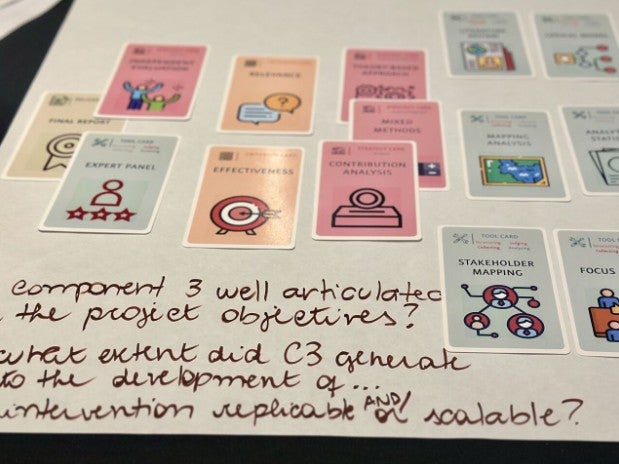
The training emphasized a central message that resonates strongly with PAHO's own work:
Evaluation is not an end in itself. Its value lies in helping institutions learn, improve, and make better decisions.
Exploring the Future of Evaluation Use
PAHO also facilitated a full-day workshop in Track 3 for approximately 20 leaders of national monitoring and evaluation systems and agencies, focused on the intersection between foresight and evaluation.
The workshop explored how evaluation systems can remain relevant in increasingly uncertain environments characterized by political transitions, digital transformation, fiscal pressures, demographic changes, and rapid technological developments. Participants examined how strategic foresight can be used alongside evaluation to strengthen decision-making, anticipate future evidence needs, and build more resilient institutions.
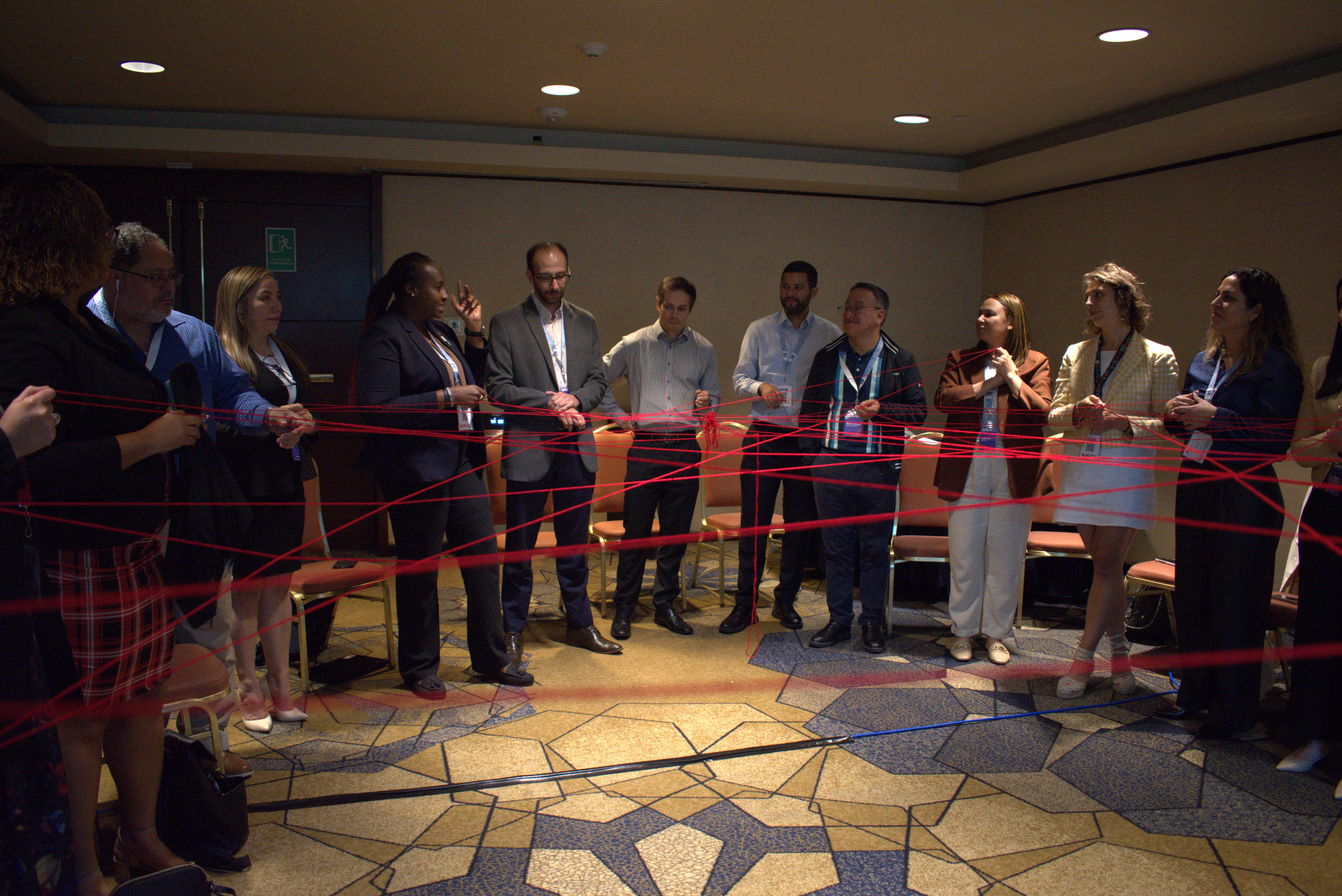
Using practical exercises and country examples, participants were invited to move beyond the traditional question of whether evaluation findings are used and instead consider:
- How evaluation use can be sustained over time.
- Which institutional conditions support evidence-informed decision-making.
- How national evaluation systems can become more resilient to changes in leadership, priorities, and political contexts.
- What capacities need to be built today to remain effective across multiple possible futures.
A recurring theme throughout the workshop was the importance of institutionalizing evaluation functions, processes, and demand for evidence rather than relying on individual champions alone. As discussed during the session, "a strategy that depends on one person is not yet an institutional capacity."
Engaging with the regional evaluation community
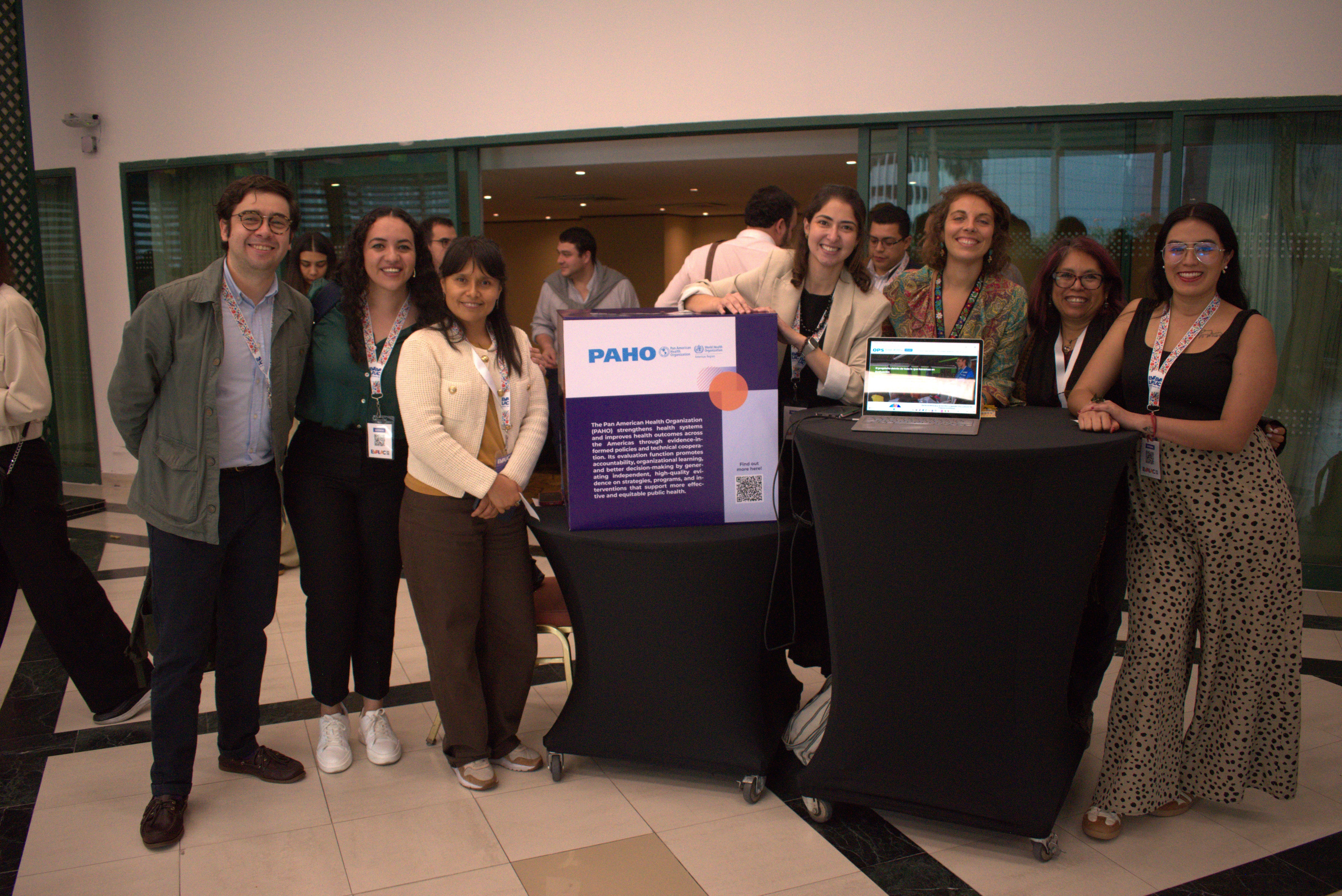
PAHO also participated in the Partners Fair, alongside organizations including the Office of Evaluation and Oversight (OVE), CLEAR-LAC, Caribbean Development Bank, FGV CLEAR, DEval, Global Evaluation Initiative, OECD, UNICEF, UNFPA, and the World Food Programme (WFP).
The event created valuable opportunities to exchange experiences with officials and evaluation leaders from across the region, explore emerging priorities in evaluation capacity development, and identify areas for future collaboration and technical support. These conversations reinforced the growing demand for practical approaches that help institutions not only conduct evaluations but also use evaluation evidence effectively in decision-making.
Building evaluation capacity within PAHO
EVALAC 2026 also provided a valuable opportunity to strengthen evaluation capacity within PAHO itself.
Seven colleagues from the PAHO/WHO Mexico Country Office participated in different EVALAC tracks, engaging with peers from across the region and bringing new perspectives and tools back to the office.
In parallel with EVALAC, PAHO's evaluation function delivered a dedicated workshop for Mexico Country Office staff on monitoring and evaluation for more effective technical cooperation. The session introduced core M&E concepts, results-based management, theories of change, performance monitoring, evaluation use, and learning for decision-making. Participants explored practical examples drawn from PAHO's work and discussed how monitoring and evaluation can be integrated into everyday technical cooperation activities.
One of the most encouraging outcomes of the week was the strong engagement demonstrated by colleagues across the office. Discussions highlighted growing interest in using evidence, results information, and evaluation more systematically to strengthen PAHO's work and impact.
Looking Ahead
PAHO's first participation in EVALAC marks an important step in expanding its engagement with the broader regional evaluation community. As countries across Latin America and the Caribbean continue strengthening their monitoring and evaluation systems, opportunities for collaboration, peer learning, and exchange of experiences will remain essential. EVALAC demonstrated the value of bringing together practitioners, policymakers, evaluators, and development partners around a shared goal: ensuring that evidence is not only generated, but used.