
During the 2024–2025 biennium, PAHO provided strategic support to strengthen the Mexican Social Security Institute (IMSS)–Bienestar as a cornerstone of efforts to expand health coverage for populations without social security coverage in Mexico.
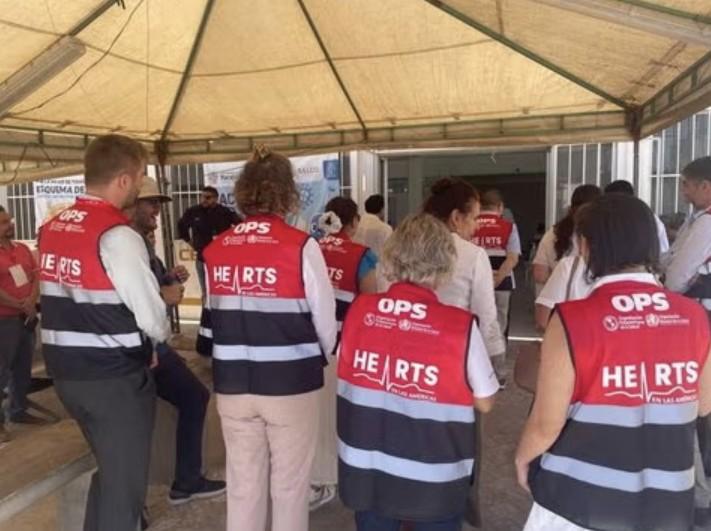
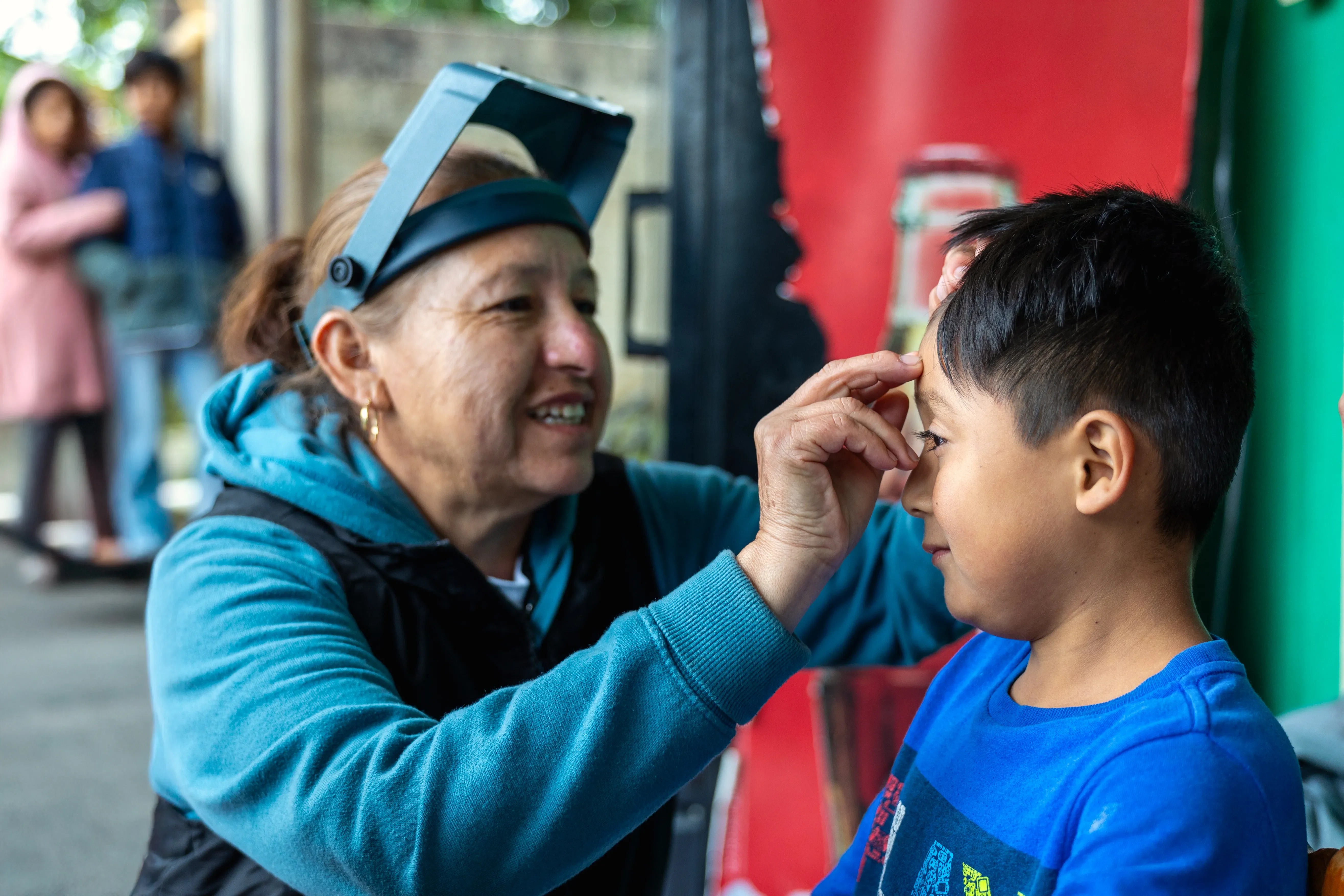
The HEARTS initiative was scaled up nationally in Mexico, with key technical assistance provided by PAHO to accelerate the strengthening of the country’s response to noncommunicable diseases (NCDs) during the biennium. Support focused on the development of clinical pathways for diabetes and hypertension; training of health personnel in quality improvement methodologies and self-assessment of primary health care (PHC) facilities; and hands-on support to facilitate the institutional adoption of the model.
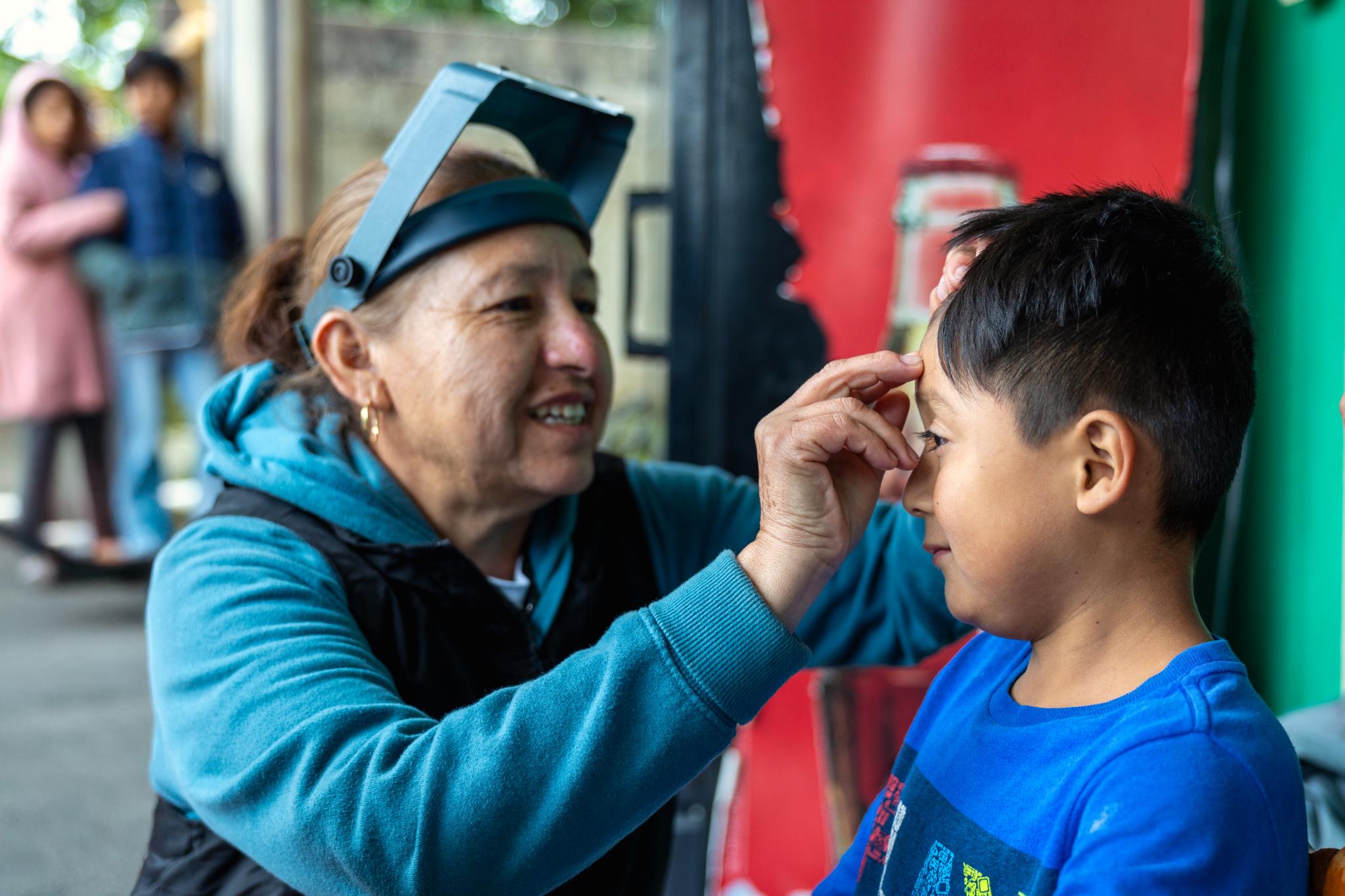
Within the framework of the Disease Elimination Initiative, PAHO supported the implementation of a population-based trachoma prevalence survey in five highly vulnerable municipalities in Chiapas, as part of efforts to assess and sustain the status of elimination of trachoma as a public health problem in Mexico.
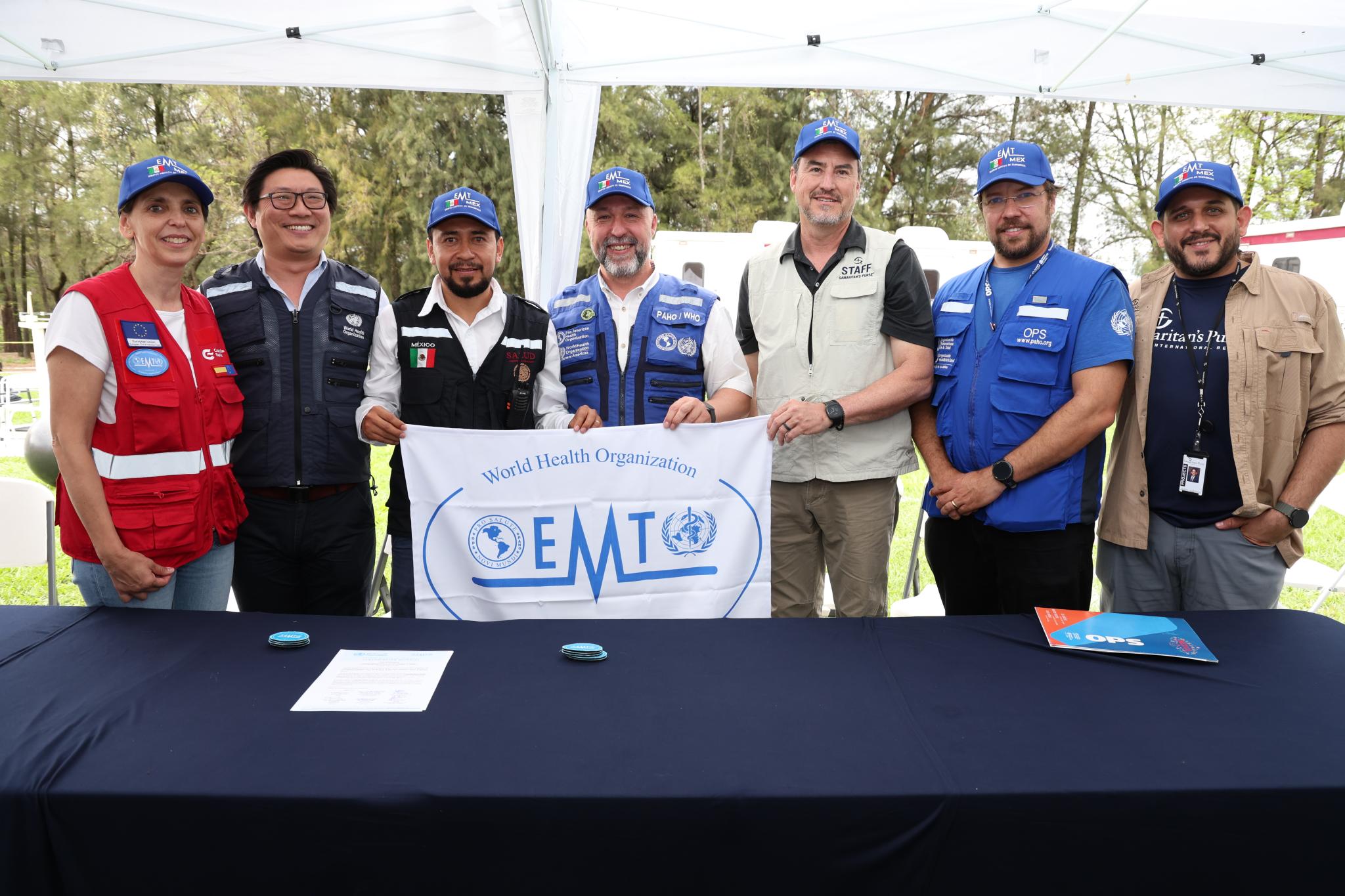
PAHO made a decisive contribution to strengthening emergency health preparedness and response in Mexico through technical and financial support for the certification of a type 2 emergency medical team (Centro Operativo para la Atención de Contingencias - COPAC), ensuring compliance with international standards for clinical care in critical situations.
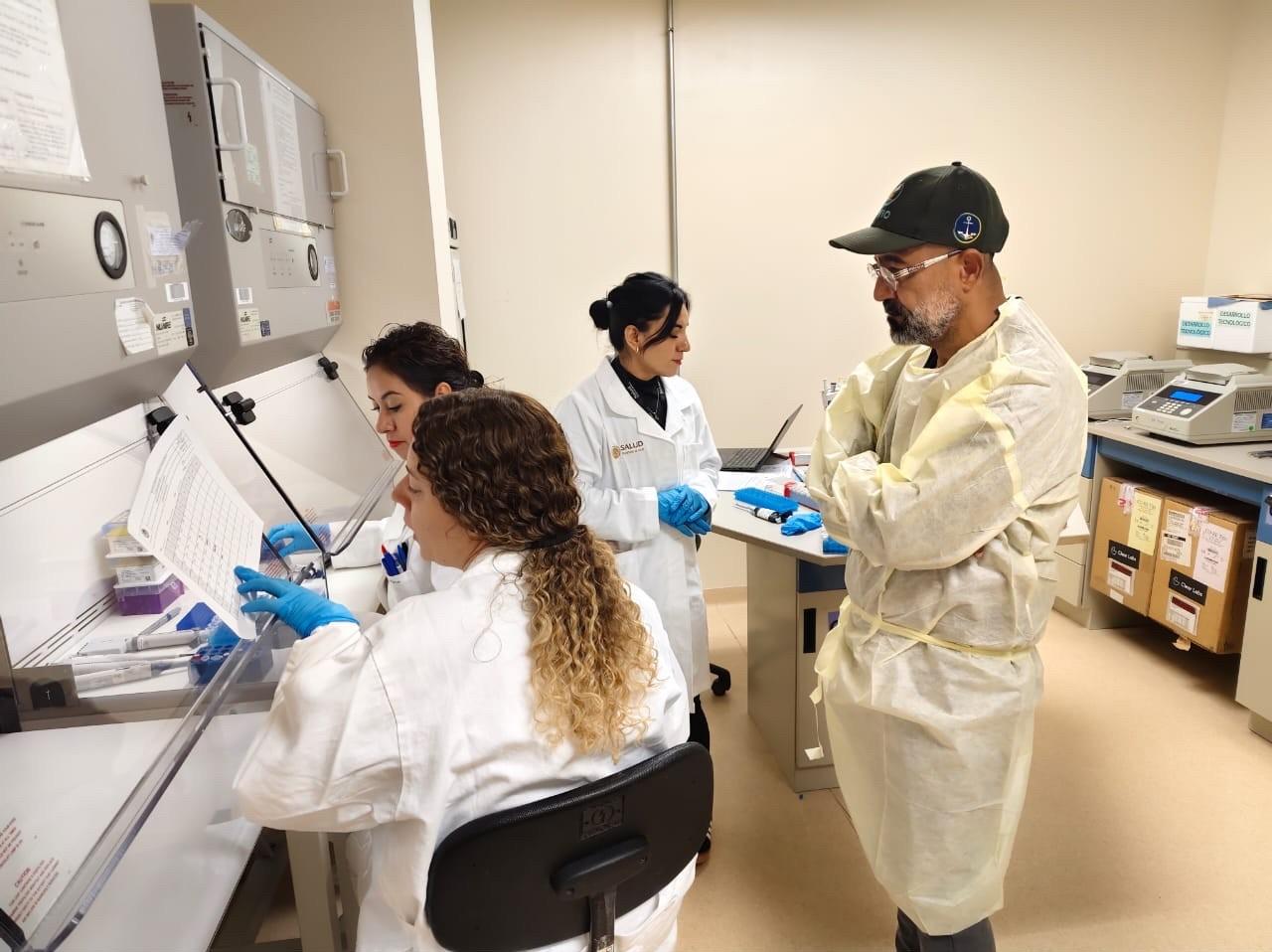
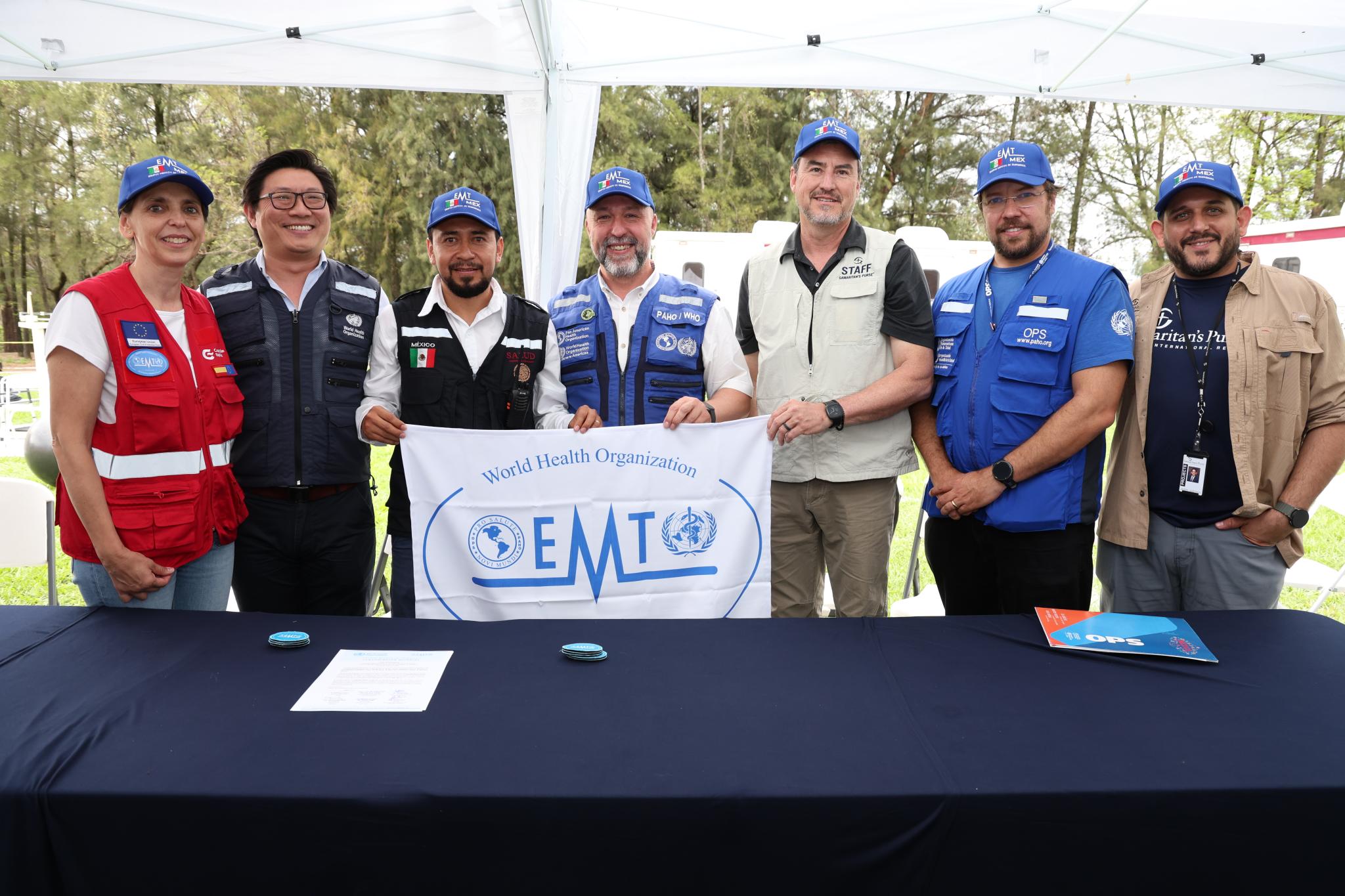
Within the framework of national efforts to strengthen health emergency preparedness and response, PAHO supported the consolidation of an integrated national genomic surveillance platform aimed at the timely detection, monitoring, and characterization of public health threats.
| Outcome Indicator | Baseline/Target | Rating |
|---|---|---|
| 01.a. Number of countries and territories that show a reduction of at least 10% in hospitalization for ambulatory care sensitive conditions | Baseline 2019 | Partially achieved |
| 01.b. Number of countries and territories that have implemented strategies to strengthen the response capacity of the first level of care | Target 2025 | Achieved |
| 02.e. Number of countries and territories with capacity to implement and monitor national policies or strategies to improve the health and development of young children that are informed by the WHO/UNICEF framework Nurturing Care for Early Childhood Development | Baseline 2019 | Achieved |
| 07.a. Number of countries and territories that have reduced the density gap with respect to physicians, nurses, and midwives, achieving at least 25 health workers per 10,000 population in underserved areas, keeping in mind the global target of 44.5 by 2030 | Baseline 2019 | Achieved |
| 08.b. Number of countries and territories with regulatory systems that reach level 3 under the WHO Global Benchmarking Tool (GBT) | Baseline 2019 | Partially achieved |
| 08.c. Number of countries that increase the number of units of blood available for transfusion per thousand inhabitants (UBAT) by at least 5% per year to reach the target of 30 UBAT | Target 2025 | Partially achieved |
| 08.d. Number of countries and territories that have regulations and oversight that ensure access to quality and safe radiological services | Target 2025 | Discrepancy |
| 10.b. Number of countries and territories that have allocated at least 30% of the public expenditure in health to the first level of care | Target 2025 | Not achieved |
| Outcome Indicator | Baseline/Target | Rating |
|---|---|---|
| 04.f. Number of countries and territories with capacity to conduct integrated surveillance of arbovirus cases | Target 2025 | Achieved |
| 04.h. Number of countries and territories reporting at least 95% coverage of 3 doses of diphtheria, pertussis, and tetanus -containing vaccine (DPT3) in 80% of municipalities | Target 2025 | Not achieved |
| 04.i. Number of countries and territories reporting at least 95% coverage at national level of 3 doses of pneumococcus-containing vaccine at national level | Target 2025 | Not achieved |
| 04.j. Number of countries and territories that have incorporated HPV vaccines in their national vaccination program | Baseline 2019 | Achieved |
| 12.b. Number of countries and territories where the entire endemic (by vector transmission) territory or territorial unit has a domestic infestation index (by the main triatomine vector species or by the substitute vector, as the case may be) of less than or equal to 1% | Baseline 2019 | Not achieved |
| 12.c. Number of countries and territories with increased antimicrobial resistance (AMR) surveillance capacity to guide the public health interventions for decreasing the risk and preventing the spread of multidrug-resistant infections through intersectoral action | Baseline 2019 | Partially achieved |
| 12.d. Number of countries and territories that have adequate mechanisms in place to prevent or mitigate risks to food safety | Baseline 2019 | Achieved |
| 17.a. Number of countries and territories that achieve 90% of viral suppression (viral load <1,000 copies/ml) in persons on antiretroviral therapy (ART) | Target 2025 | Achieved |
| 17.b. Number of countries and territories with >80% of malaria cases investigated and classified in areas targeted for elimination or prevention of reestablishment | Baseline 2019 | Achieved |
| 17.c [a]. Interruption of transmission of neglected infectious diseases (NID) in countries, following WHO criteria and guidelines [Trachoma] | Baseline 2019 | Achieved |
| 17.c [b]. Interruption of transmission of neglected infectious diseases (NID) in countries, following WHO criteria and guidelines [Chagas Disease] | Baseline 2019 | Discrepancy |
| 17.c [c]. Interruption of transmission of neglected infectious diseases (NID) in countries, following WHO criteria and guidelines [Dog-mediated human rabies] | Baseline 2019 | Achieved |
| 17.c [d]. Interruption of transmission of neglected infectious diseases (NID) in countries, following WHO criteria and guidelines [Human taeniasis/cysticercosis] | Target 2025 | Discrepancy |
| 17.c [f]. Interruption of transmission of neglected infectious diseases (NID) in countries, following WHO criteria and guidelines [Onchocerciasis] | Baseline 2019 | Achieved |
| 17.d. Number of countries and territories with established capacity and effective processes to eliminate human rabies transmitted by dogs | Baseline 2019 | Achieved |
| Outcome Indicator | Baseline/Target | Rating |
|---|---|---|
| 05.a. Number of countries and territories that achieve the 2025 global NCD target to halt the rise in diabetes assessed by age-standardized prevalence of raised blood glucose/diabetes among adults aged 18+ years | Baseline 2019 | Partially achieved |
| 05.b. Number of countries and territories that reach a target of 35% prevalence of controlled hypertension at population level (<140/90mmHg) among persons with hypertension 18+ years of age | Target 2025 | Partially achieved |
| 05.c. Number of countries and territories with cervical cancer screening programs that achieve at least 70% coverage of screening in women aged 30-49 years, or for the age group defined by the national policy | Target 2025 | Discrepancy |
| 05.e. Number of countries and territories whose surveillance systems have the capacity to report on key indicators of the Global Monitoring Framework for Noncommunicable Diseases | Target 2025 | Not achieved |
| 05.g. Number of countries and territories that have increased capacity to manage mental health disorders at the first level of care | Target 2025 | Discrepancy |
| 05.i. Number of countries and territories that have increased the rate of persons receiving treatment interventions (pharmacological, psychosocial, and rehabilitation and aftercare services) for substance use disorders in the health service network | Baseline 2019 | Achieved |
| 06.a. Number of countries and territories that minimize the time interval between road traffic crashes and the provision of first professional emergency care | Target 2025 | Not achieved |
| 06.b. Number of countries and territories that provide comprehensive post-rape care services in emergency health services, consistent with WHO guidelines | Target 2025 | Achieved |
| 13.d. Number of countries and territories that have eliminated industrially produced trans fatty acids | Target 2025 | Achieved |
| 15.a. Number of countries and territories with an operational advisory committee or lead agency on road safety that supports the development and/or implementation of a national road safety strategy | Baseline 2019 | Achieved |
| 15.b. Number of countries and territories that have a national or multisectoral plan addressing violence that includes the health system | Baseline 2019 | Achieved |
| 16.a. Number of countries and territories with ongoing collaboration between government mental health services and other departments, services, and sectors | Target 2025 | Achieved |
| Outcome Indicator | Baseline/Target | Rating |
|---|---|---|
| 18.a. Number of countries and territories with capacity to implement and monitor policies to address social determinants of health | Target 2025 | Achieved |
| 18.g. Number of countries and territories with capacity to address health in chemical safety (including human health exposure to metals and/or pesticides) | Target 2025 | Achieved |
| 18.h. Number of countries and territories with capacity to address the health-related effects of climate change | Baseline 2019 | Discrepancy |
| 19.a. Number of countries and territories that implement the Health in All Policies framework to improve health equity as well as health and well-being | Target 2025 | Achieved |
| 19.b. Number of countries and territories that have integrated health promotion into health services based on the principles of primary health care | Target 2025 | Achieved |
| 19.c. Number of countries and territories that are implementing policies or strategies based on regional guidance for healthy schools | Baseline 2019 | Achieved |
| 26.a. Number of countries and territories with institutional responses and accountability mechanisms that are advancing health equity, gender and ethnic equality in health, and human rights | Target 2025 | Achieved |
| Outcome Indicator | Baseline/Target | Rating |
|---|---|---|
| 20.a. Number of countries and territories that implement integrated interoperable information systems for health that include subnational disaggregation | Target 2025 | Achieved |
| 21.a. Number of countries and territories with functional governance for generating and using evidence integrated into health systems | Baseline 2019 | Achieved |
| 21.b. Number of countries and territories that generate, analyze, and use data and information according to health priorities, disaggregated by geopolitical and demographic strata, as appropriate to the national context | Baseline 2019 | Achieved |
| 21.c. Number of countries and territories with established mechanisms on knowledge management, multilingualism, open access, and publishing | Baseline 2019 | Achieved |
| 22.a. Number of countries and territories implementing a funded policy, strategy and/or agenda on research and innovation for health | Target 2025 | Achieved |
| 22.b. Number of countries and territories that have ethical standards for conducting research with human subjects | Baseline 2019 | Achieved |
| Outcome Indicator | Baseline/Target | Rating |
|---|---|---|
| 23.a. Number of countries and territories that meet or exceed minimum capacities to manage public health risks associated with emergencies | Baseline 2019 | Achieved |
| 23.b. Number of States Parties meeting and sustaining International Health Regulations (IHR) requirements for core capacities | Target 2025 | Achieved |
| 24.a. Number of countries and territories with installed capacity to effectively respond to major epidemics and pandemics | Target 2025 | Achieved |
| Outcome Indicator | Baseline/Target | Rating |
|---|---|---|
| 27.a. Proportion of countries and territories where the national health authority reports satisfaction with PAHO/WHO’s leading role on global and regional health issues | Target 2025 | Achieved |
| 27.b. Number of countries and territories for which there is alignment between the national health policy, strategy, or plan and the outcomes defined in the PAHO Strategic Plan 2020-2025 | Baseline 2019 | Achieved |
1. Access to comprehensive and quality health services
2. Health throughout the life course
4. Response capacity for communicable diseases
5. Access to services for NCDs and mental health conditions
6. Response capacity for violence and injuries
7. Health workforce
8. Access to health technologies
10. Increased public health financing
12. Risk factors for communicable diseases
13. Risk factors for noncommunicable diseases
15. Intersectoral response to violence and injuries
16. Intersectoral action on mental health
17. Elimination of communicable diseases
18. Social and environmental determinants
19. Health promotion and intersectoral action
20. Integrated information systems for health
21. Data, information, knowledge, and evidence
22. Research, ethics, and innovation for health
23. Health emergencies preparedness and risk reduction
24. Epidemic and pandemic prevention and control
26. CCTs: equity, gender, ethnicity, and human rights
27. Leadership and governance
| Output (OPT) Indicator | Baseline/Target | Rating |
|---|---|---|
| 01.1.a. Number of countries and territories with frameworks in place for integrated health service delivery networks (IHSDN) to improve the resolution capacity of the first level of care and integrate priority programs, including NCDs and the elimination agenda | Baseline 2023 | Achieved |
| 01.2.a. Number of countries and territories implementing strategies and/or plans of action to improve quality of care in health service delivery | Target 2025 | Achieved |
| 02.1.a. Number of countries and territories that are implementing a national plan in alignment with the Plan of Action for Women’s, Children’s, and Adolescents’ Health 2018–2030 | Baseline 2023 | Achieved |
| 02.2.b. Number of countries and territories that measure percentage of pregnant women who received antenatal care four or more times, disaggregated by age, race/ethnicity, and place of residence | Target 2025 | Achieved |
| 02.2.c. Number of countries and territories implementing regular maternal and perinatal death reviews and audits | Baseline 2023 | Achieved |
| 02.2.d. Number of countries and territories that conduct periodic developmental assessment as part of their services for children | Baseline 2023 | Achieved |
| 02.2.e. Number of countries and territories implementing strategies to increase access to responsive and quality health services for adolescents | Baseline 2023 | Achieved |
| 03.1.a. Number of countries and territories that implement comprehensive assessments of older persons at the first level of care | Baseline 2023 | Achieved |
| 07.1.a. Number of countries and territories that are implementing a national policy on human resources for health | Target 2025 | Discrepancy |
| 07.2.a. Number of countries and territories with a norm that defines the capacities and scope of practice of inter-professional teams at the first level of care | Baseline 2023 | Achieved |
| 07.3.a. Number of countries and territories enabled to strengthen health workforce competencies and capacity-building programs through the Virtual Campus for Public Health and other WHO platforms | Baseline 2023 | Achieved |
| 08.1.a. Number of countries and territories with updated national policies and/or strategies on access, quality, and use of medicines and other health technologies | Target 2025 | Achieved |
| 08.2.a. Number of countries and territories that have established an institutional development plan to improve regulatory capacity for health products based on the assessment of their national regulatory capacities by the Global Benchmarking Tool | Target 2025 | Achieved |
| 08.3.a. Number of countries and territories with a comprehensive strategy on multisource/generic medicines | Baseline 2023 | Achieved |
| 08.4.a. Number of countries and territories implementing a national plan to strengthen access to radiological services and radiation safety | Target 2025 | Discrepancy |
| 08.4.d. Number of countries and territories implementing a national plan to strengthen access to transplant services | Baseline 2023 | Achieved |
| 09.4.a. Number of countries and territories that have established, reviewed, and/or updated health-related legislation and regulatory frameworks in the last five years in support of universal access to health and universal health coverage, the realization of the right to health, and other health-related matters from a human rights perspective | Target 2025 | Achieved |
| 09.5.a. Number of countries and territories implementing interventions and actions to promote and protect the health and well-being of the migrant population within national health policies, plans, and programs | Baseline 2023 | Achieved |
| 10.1.a. Number of countries and territories implementing equitable health financing strategies and reforms to sustain progress toward universal health, including specific strategies to progressively increase public expenditure in health in a sustainable manner | Target 2025 | Achieved |
| 10.1.b. Number of countries and territories implementing payment systems and resource allocation strategies to promote a PHC approach in the organization of health services delivery | Target 2025 | Achieved |
| 11.1.a. Number of countries and territories implementing specific strategies to eliminate or diminish direct payments at the point of service | Target 2025 | Achieved |
| Output (OPT) Indicator | Baseline/Target | Rating |
|---|---|---|
| 04.1.a. Number of countries and territories implementing national norms, standards, and tools aligned with PAHO and WHO guidelines on TB, HIV, STIs, and VH, with emphasis on key and vulnerable populations | Baseline 2023 | Achieved |
| 04.2.a. Number of countries and territories implementing the new arboviral disease guidelines for patient care in the Region of the Americas | Baseline 2023 | Achieved |
| 04.3.a. Number of NID-endemic countries and territories that implement PAHO recommendations on integrated interventions to reduce the burden of NIDs through their health systems | Baseline 2023 | Achieved |
| 04.4.a. Number of countries and territories that implement PAHO/WHO recommended policies and inter programmatic approaches related to malaria | Baseline 2023 | Achieved |
| 04.5.a. Number of countries and territories with DPT3 immunization coverage of at least 95% that are implementing strategies to reach unvaccinated and under-vaccinated populations | Target 2025 | Discrepancy |
| 04.5.b. Number of countries and territories generating evidence to support decisions on the introduction or post-introduction of new vaccines | Baseline 2023 | Discrepancy |
| 12.1.a. Number of countries and territories that have campaigns on antimicrobial resistance and rational use aimed at the general public and at professional sectors | Target 2025 | Achieved |
| 12.2.a. Number of countries and territories with active programs to control antimicrobial resistance through scaling up of infection prevention and control and provision of water, sanitation, and hygiene in health facilities | Target 2025 | Achieved |
| 12.3.a. Number of countries and territories with an established multisectoral coordinating mechanism to oversee national strategies to combat antimicrobial resistance | Target 2025 | Achieved |
| 12.4.a. Number of countries and territories that annually provide laboratory-based data on antimicrobial resistance | Target 2025 | Achieved |
| 12.5.a. Number of countries and territories reporting participation of communities in the response to HIV, TB, STIs, and viral hepatitis | Baseline 2023 | Achieved |
| 12.6.a. Number of NID-endemic countries and territories that use the framework of the WHO WASH-NTD strategy as part of their national or subnational approach to tackle NIDs | Target 2025 | Discrepancy |
| 12.7.a. Number of countries and territories that have in place or under implementation intersectoral mandatory risk-based regulatory mechanisms, food monitoring and foodborne disease surveillance systems, or any other practice to protect public health from foodborne diseases, with a One Health approach | Baseline 2023 | Achieved |
| 12.8.a. Number of countries and territories that have programs to prevent or mitigate zoonotic diseases and snake/arthropod envenoming | Baseline 2023 | Achieved |
| 12.9.a. Number of countries and territories with integrated territorial actions for prevention, control, and/or surveillance of vector-borne transmission of Trypanosoma cruzi | Target 2025 | Not achieved |
| 17.1.a. Number of countries and territories implementing PAHO/WHO-recommended interventions in active foci and areas at risk of reestablishment of malaria | Baseline 2023 | Achieved |
| 17.5.a. Number of countries and territories that have maintained their status as free from both wild poliovirus and circulating vaccine-derived poliovirus | Baseline 2023 | Achieved |
| 17.6.a. Number of countries and territories that have met the established minimum annual rate of suspected measles/rubella cases plus at least three of the five surveillance indicators defined in the Plan of Action for the Sustainability of Measles, Rubella, and Congenital Rubella Syndrome Elimination in the Americas 2018-2023 | Baseline 2023 | Achieved |
| 17.8.a. Number of countries and territories implementing plans of action to strengthen prevention, prophylaxis, surveillance, and control for the validation of the elimination of rabies transmitted by dogs | Baseline 2023 | Achieved |
| Output (OPT) Indicator | Baseline/Target | Rating |
|---|---|---|
| 05.1.a. Number of countries and territories that are implementing evidence-based national guidelines/protocols/standards for the management of NCDs (i.e. cardiovascular disease, cancer, diabetes, and chronic respiratory disease) | Baseline 2023 | Achieved |
| 05.3.a. Number of countries and territories with comprehensive mental health services integrated into primary health care in at least 50% of primary health care facilities | Baseline 2023 | Discrepancy |
| 05.4.a. Number of countries and territories that collect, analyze, and report a core set of mental health indicators within the national health information systems | Baseline 2023 | Achieved |
| 06.1.a. Number of countries and territories that have a single emergency care access number with full national coverage | Baseline 2023 | Achieved |
| 06.2.a. Number of countries and territories that are implementing national standard operating procedures, protocols, and/or guidelines for the health system response to violence, aligned with PAHO and WHO guidelines | Target 2025 | Achieved |
| 13.1.a. Number of countries and territories implementing population-based policy measures to reduce the harmful use of alcohol in line with PAHO and WHO resolutions | Baseline 2023 | Achieved |
| 13.1.b. Number of countries and territories implementing a national policy or strategy on physical activity | Baseline 2023 | Achieved |
| 13.1.c. Number of countries and territories implementing policies to reduce salt/sodium consumption in the population | Baseline 2023 | Achieved |
| 13.1.d. Number of countries and territories implementing policies and/or actions to regulate unhealthy food and drink products | Baseline 2023 | Achieved |
| 13.1.e. Number of countries and territories covered by best-practice policies to eliminate industrially produced trans-fatty acids in the food supply | Baseline 2023 | Achieved |
| 13.1.f. Number of Member States that have implemented the four major demand-reduction measures in the WHO Framework Convention on Tobacco Control (FCTC) at the highest level of achievement | Baseline 2023 | Achieved |
| 14.1.a. Number of countries and territories that are implementing national policies consistent with the WHO Global Targets 2025 for maternal, infant, and young child nutrition and the nutrition components of the Sustainable Development Goals | Target 2025 | Achieved |
| 14.1.b. Number of countries and territories implementing policies to protect, promote, and support optimal breastfeeding and complementary feeding practices | Baseline 2023 | Achieved |
| 15.2.a. Number of countries and territories that have a national multisectoral coalition/task force to prevent and respond to violence that includes the health sector | Baseline 2023 | Achieved |
| 16.2.a. Number of countries and territories with national multisectoral strategies and plans aimed at the prevention of suicide across the life course and addressing its main risk factors and social determinants | Baseline 2023 | Achieved |
| Output (OPT) Indicator | Baseline/Target | Rating |
|---|---|---|
| 18.1.a. Number of countries and territories that have developed national, subnational, or local health policies, plans, programs, and/or projects that address the social determinants of health and inequities | Baseline 2023 | Achieved |
| 18.2.a. Number of countries and territories implementing water and sanitation safety plans, policies, programs, and/or interventions to reduce health risks associated with water quality and unsanitary conditions, following WHO guidelines | Target 2025 | Partially achieved |
| 18.2.c. Number of countries and territories implementing plans, policies, programs, and/or interventions to reduce health risks associated with outdoor air pollution, following WHO guidelines | Baseline 2023 | Achieved |
| 18.2.d. Number of countries and territories implementing plans, policies, programs, and/or interventions to reduce health risks associated with hazardous chemical exposures, following the WHO Chemicals Road Map, the Minamata Convention, and other chemical-related policies and programs | Target 2025 | Achieved |
| 18.2.f. Number of countries and territories implementing plans, policies, programs, and/or interventions to reduce health risks associated with household air pollution due to use of solid fuels for cooking and heating, following WHO guidelines | Baseline 2023 | Achieved |
| 19.1.a. Number of countries and territories that have laws, regulations, or policies in at least two categories of healthy settings | Baseline 2023 | Achieved |
| 19.2.a. Number of countries and territories that build capacities of local-level governments to integrate health promotion in their planning | Baseline 2023 | Achieved |
| 19.4.a. Number of countries and territories implementing a national health promotion policy | Baseline 2023 | Achieved |
| 19.4.b. Number of countries and territories implementing mechanisms that facilitate the participation of community organizations and leaders in public health programs | Baseline 2023 | Achieved |
| 26.2.a. Number of countries and territories implementing policies, plans, and strategies to advance health equity | Baseline 2023 | Achieved |
| 26.3.a. Number of countries and territories implementing policies, plans, and programs to advance gender equality in health | Baseline 2023 | Achieved |
| 26.4.a. Number of countries and territories implementing policies, plans, and programs to advance ethnic equality in health | Baseline 2023 | Achieved |
| Output (OPT) Indicator | Baseline/Target | Rating |
|---|---|---|
| 20.1.a. Number of countries and territories that have developed and implemented a plan to strengthen information systems for health based on PAHO’s IS4H maturity assessment model | Baseline 2023 | Achieved |
| 20.2.a. Number of countries and territories implementing an updated plan of action for strengthening the quality and coverage of vital statistics | Baseline 2023 | Achieved |
| 20.3.a. Number of countries and territories implementing digital health strategies or roadmaps, aligned with the regional policy and global strategy | Baseline 2023 | Achieved |
| 21.1.a. Number of countries and territories integrating scientific evidence on health into practices, programs, or policies, using standardized methodologies including evidence-informed clinical and public health guidelines, norms, and standards | Baseline 2023 | Achieved |
| 21.2.a. Number of countries and territories with mechanisms (policies, standards, tools, etc.) in place for the generation, dissemination, and preservation of, and access to, scientific and technical data, information, and evidence for health | Baseline 2023 | Achieved |
| 21.3.a. Number of countries and territories that generate and disseminate health analyses and/or health intelligence reports on relevant public health topics, including SDG 3 progress monitoring and health equity analyses | Baseline 2023 | Achieved |
| 22.2.a. Number of countries and territories with the national health authority enabled to address ethical issues and establish effective mechanisms for ethics oversight of research | Baseline 2023 | Achieved |
| 22.3.a. Number of countries and territories that have increased the number of scientific publications on health that respond to priority research agendas and the SDGs | Baseline 2023 | Achieved |
| Output (OPT) Indicator | Baseline/Target | Rating |
|---|---|---|
| 23.1.a. Number of States Parties completing annual reporting on the International Health Regulations (2005) | Baseline 2023 | Achieved |
| 23.1.b. Number of countries and territories that have evaluated disaster and emergency preparedness capacities in the health sector | Baseline 2023 | Achieved |
| 23.2.a. Number of States Parties with national action plans developed for strengthening International Health Regulations (2005) core capacities | Baseline 2023 | Discrepancy |
| 23.2.b. Number of countries and territories with full-time staff assigned to health emergencies | Baseline 2023 | Achieved |
| 23.3.a. Number of States Parties that have conducted simulation exercises or after-action review | Baseline 2023 | Discrepancy |
| 23.4.a. Number of countries and territories that include safe hospital criteria in the planning, design, construction, and operation of health services | Baseline 2023 | Achieved |
| 24.2.a. Number of countries and territories with strategies and/or plans in place to detect and respond to high-threat and emerging pathogens, including emerging zoonotic pathogens | Baseline 2023 | Achieved |
| 24.3.a. Number of countries and territories with access to established expert networks and national laboratory policies to support prediction, detection, prevention, control, and response to high-threat and emerging pathogens, including emerging zoonotic pathogen | Baseline 2023 | Achieved |
| 24.3.b. Number of countries and territories performing regular monitoring/auditing of infection prevention and control practices in referral care facilities | Target 2025 | Partially achieved |
| 24.3.c. Number of countries and territories with operational integrated surveillance systems and pandemic preparedness plans for respiratory viruses, including influenza and COVID-19 | Baseline 2023 | Achieved |