

During the 2024–2025 biennium, PAHO contributed to strengthening Dominica’s health governance and stewardship by reinforcing core system capacities that underpin access to quality services. Through direct technical cooperation delivered by the Eastern Caribbean Countries office, PAHO supported national efforts to strengthen health workforce governance, with a focus on health workforce planning and forecasting.
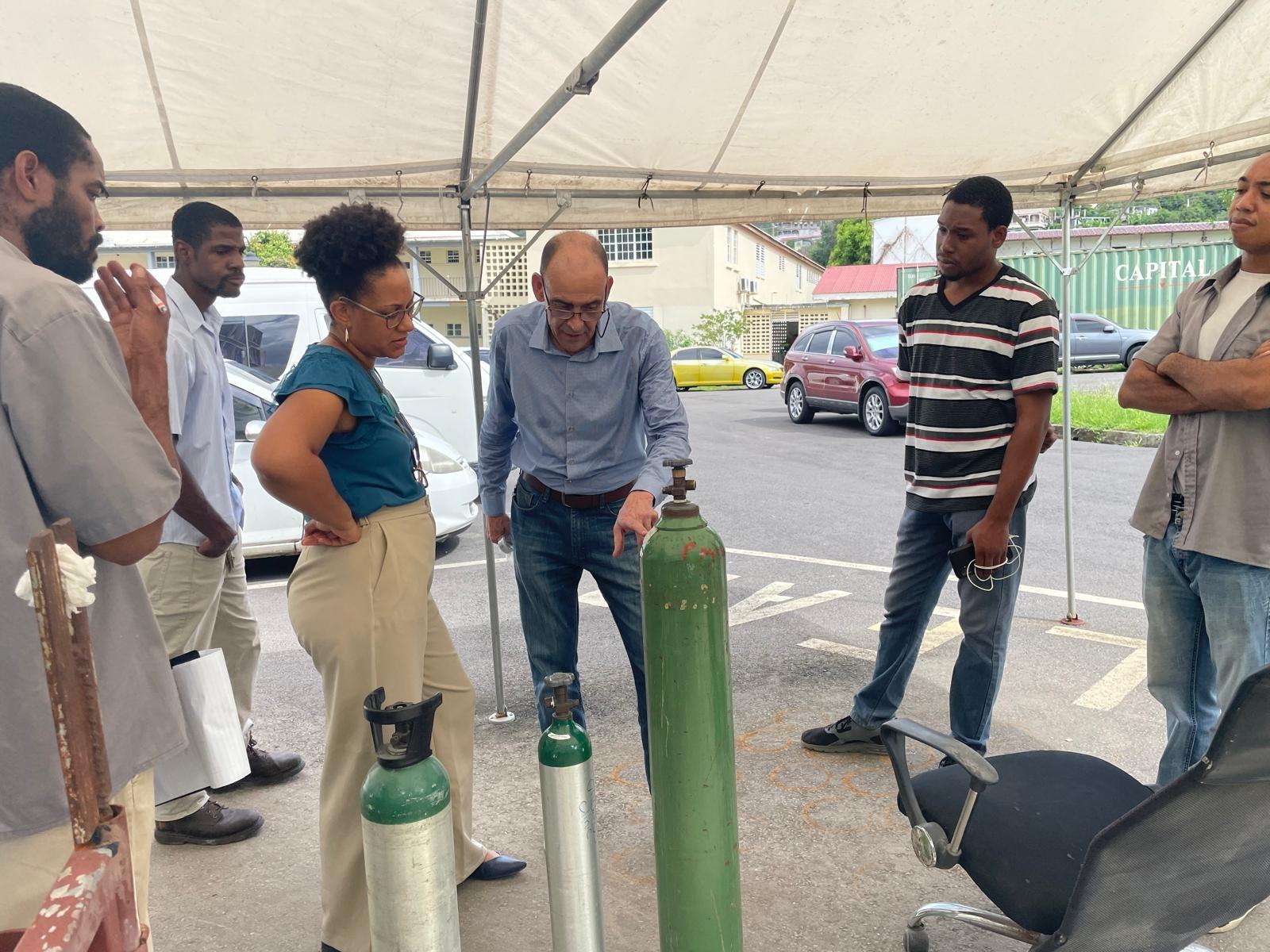
During the biennium, PAHO played a key role in strengthening Dominica’s capacity to improve access to safe, effective, and quality-assured medicines and health technologies. Through subregional cooperation mechanisms and targeted country support, PAHO provided technical recommendations to the national regulatory authority to strengthen pharmaceutical supply chain management and regulatory practices. This included guidance to improve the national medical oxygen system at the Dominica–China Friendship Hospital, addressing a critical component of essential clinical care and emergency readiness. These actions were embedded within broader efforts to strengthen collaboration between countries and regional partners and to promote the effective use of PAHO’s Regional Revolving Funds, enhancing coordination, transparency, and resilience in procurement and supply systems.
In the context of increasing climate and social vulnerabilities, PAHO supported Dominica in strengthening its national capacity to address the social and environmental determinants of health through intersectoral and evidence-based action.
PAHO contributed significantly to improving Dominica’s capacity to reorganize and integrate mental health services into primary health care during the 2024–2025 biennium. Through a multicountry strategy implemented in collaboration with national authorities, PAHO provided direct technical assistance to strengthen mental health governance, service capacity, and community-based approaches. In Dominica, workforce competencies were reinforced through training in accordance with internationally accepted standards and QualityRights-related actions, equipping primary care providers with standardized tools to identify, manage, and refer mental health conditions.
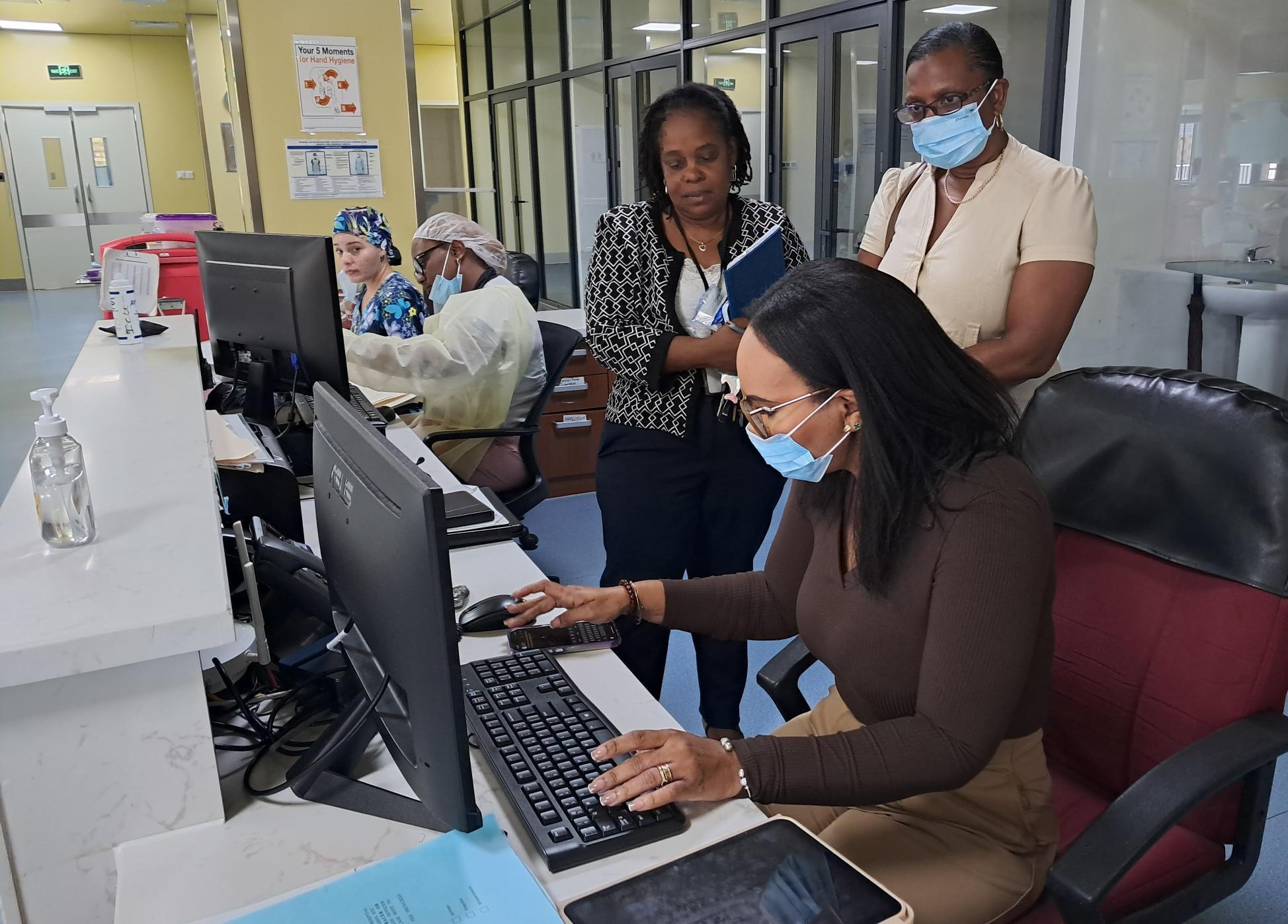
PAHO supported Dominica in strengthening national capacities for all-hazards health emergency preparedness and response throughout the biennium. Through direct technical cooperation and training, Dominica completed key preparedness and response activities, including training in mass casualty management, incident command system, emergency care, and surveillance-related training supported by PAHO.
| Outcome Indicator | Baseline/Target | Rating |
|---|---|---|
| 01.b. Number of countries and territories that have implemented strategies to strengthen the response capacity of the first level of care | Target 2025 | Partially achieved |
| 10.a. Number of countries and territories that have increased public expenditure on health to at least 6% of GDP | Target 2025 | Not achieved |
| Outcome Indicator | Baseline/Target | Rating |
|---|---|---|
| 04.c. Number of countries and territories with at least 95% coverage of syphilis treatment in pregnant women | Baseline 2019 | Not achieved |
| 04.g. Number of countries and territories reporting at least 95% coverage at the national level of the second dose of measles and rubella containing vaccine (MRCV) | Target 2025 | Achieved |
| 04.h. Number of countries and territories reporting at least 95% coverage of 3 doses of diphtheria, pertussis, and tetanus -containing vaccine (DPT3) in 80% of municipalities | Target 2025 | Not achieved |
| 04.j. Number of countries and territories that have incorporated HPV vaccines in their national vaccination program | Target 2025 | Achieved |
| 17.b. Number of countries and territories with >80% of malaria cases investigated and classified in areas targeted for elimination or prevention of reestablishment | Baseline 2019 | Achieved |
| 17.c [c]. Interruption of transmission of neglected infectious diseases (NID) in countries, following WHO criteria and guidelines [Dog-mediated human rabies] | Baseline 2019 | Achieved |
| 17.d. Number of countries and territories with established capacity and effective processes to eliminate human rabies transmitted by dogs | Baseline 2019 | Achieved |
| Outcome Indicator | Baseline/Target | Rating |
|---|---|---|
| 05.e. Number of countries and territories whose surveillance systems have the capacity to report on key indicators of the Global Monitoring Framework for Noncommunicable Diseases | Target 2025 | Not achieved |
| 13.d. Number of countries and territories that have eliminated industrially produced trans fatty acids | Target 2025 | Not achieved |
| 15.a. Number of countries and territories with an operational advisory committee or lead agency on road safety that supports the development and/or implementation of a national road safety strategy | Baseline 2019 | Achieved |
| Outcome Indicator | Baseline/Target | Rating |
|---|---|---|
| 18.h. Number of countries and territories with capacity to address the health-related effects of climate change | Baseline 2019 | Achieved |
| 19.a. Number of countries and territories that implement the Health in All Policies framework to improve health equity as well as health and well-being | Target 2025 | Achieved |
| Outcome Indicator | Baseline/Target | Rating |
|---|---|---|
| 21.b. Number of countries and territories that generate, analyze, and use data and information according to health priorities, disaggregated by geopolitical and demographic strata, as appropriate to the national context | Target 2025 | Partially achieved |
| 21.c. Number of countries and territories with established mechanisms on knowledge management, multilingualism, open access, and publishing | Target 2025 | Achieved |
| Outcome Indicator | Baseline/Target | Rating |
|---|---|---|
| 23.a. Number of countries and territories that meet or exceed minimum capacities to manage public health risks associated with emergencies | Baseline 2019 | Achieved |
| 23.b. Number of States Parties meeting and sustaining International Health Regulations (IHR) requirements for core capacities | Target 2025 | Achieved |
| 24.a. Number of countries and territories with installed capacity to effectively respond to major epidemics and pandemics | Target 2025 | Achieved |
| Outcome Indicator | Baseline/Target | Rating |
|---|---|---|
| 27.a. Proportion of countries and territories where the national health authority reports satisfaction with PAHO/WHO’s leading role on global and regional health issues | Target 2025 | Achieved |
| 27.b. Number of countries and territories for which there is alignment between the national health policy, strategy, or plan and the outcomes defined in the PAHO Strategic Plan 2020-2025 | Target 2025 | Achieved |
1. Access to comprehensive and quality health services
4. Response capacity for communicable diseases
5. Access to services for NCDs and mental health conditions
10. Increased public health financing
13. Risk factors for noncommunicable diseases
15. Intersectoral response to violence and injuries
17. Elimination of communicable diseases
18. Social and environmental determinants
19. Health promotion and intersectoral action
21. Data, information, knowledge, and evidence
23. Health emergencies preparedness and risk reduction
24. Epidemic and pandemic prevention and control
27. Leadership and governance
| Output (OPT) Indicator | Baseline/Target | Rating |
|---|---|---|
| 01.1.a. Number of countries and territories with frameworks in place for integrated health service delivery networks (IHSDN) to improve the resolution capacity of the first level of care and integrate priority programs, including NCDs and the elimination agenda | Target 2025 | Partially achieved |
| 01.2.a. Number of countries and territories implementing strategies and/or plans of action to improve quality of care in health service delivery | Target 2025 | Partially achieved |
| 02.2.b. Number of countries and territories that measure percentage of pregnant women who received antenatal care four or more times, disaggregated by age, race/ethnicity, and place of residence | Baseline 2023 | Achieved |
| 07.1.a. Number of countries and territories that are implementing a national policy on human resources for health | Target 2025 | Partially achieved |
| 07.2.a. Number of countries and territories with a norm that defines the capacities and scope of practice of inter-professional teams at the first level of care | Target 2025 | Partially achieved |
| 08.1.a. Number of countries and territories with updated national policies and/or strategies on access, quality, and use of medicines and other health technologies | Target 2025 | Partially achieved |
| 09.1.a. Number of countries and territories implementing a strategy and/or plan of action to improve the essential public health functions as the basis for building resilient health systems | Target 2025 | Partially achieved |
| 09.2.a. Number of countries and territories with mechanisms for monitoring and evaluating progress toward universal health and primary health care using PAHO’s frameworks and tools | Target 2025 | Partially achieved |
| 10.1.a. Number of countries and territories implementing equitable health financing strategies and reforms to sustain progress toward universal health, including specific strategies to progressively increase public expenditure in health in a sustainable manner | Target 2025 | Not achieved |
| 11.1.a. Number of countries and territories implementing specific strategies to eliminate or diminish direct payments at the point of service | Target 2025 | Partially achieved |
| Output (OPT) Indicator | Baseline/Target | Rating |
|---|---|---|
| 04.1.a. Number of countries and territories implementing national norms, standards, and tools aligned with PAHO and WHO guidelines on TB, HIV, STIs, and VH, with emphasis on key and vulnerable populations | Target 2025 | Achieved |
| 04.2.a. Number of countries and territories implementing the new arboviral disease guidelines for patient care in the Region of the Americas | Target 2025 | Partially achieved |
| 12.3.a. Number of countries and territories with an established multisectoral coordinating mechanism to oversee national strategies to combat antimicrobial resistance | Target 2025 | Not achieved |
| 12.4.a. Number of countries and territories that annually provide laboratory-based data on antimicrobial resistance | Target 2025 | Achieved |
| 12.8.a. Number of countries and territories that have programs to prevent or mitigate zoonotic diseases and snake/arthropod envenoming | Baseline 2023 | Achieved |
| 17.3.a. Number of countries and territories that administer hepatitis B vaccine to newborns during the first 24 hours | Baseline 2023 | Achieved |
| 17.5.a. Number of countries and territories that have maintained their status as free from both wild poliovirus and circulating vaccine-derived poliovirus | Baseline 2023 | Achieved |
| 17.6.a. Number of countries and territories that have met the established minimum annual rate of suspected measles/rubella cases plus at least three of the five surveillance indicators defined in the Plan of Action for the Sustainability of Measles, Rubella, and Congenital Rubella Syndrome Elimination in the Americas 2018-2023 | Baseline 2023 | Partially achieved |
| 17.8.a. Number of countries and territories implementing plans of action to strengthen prevention, prophylaxis, surveillance, and control for the validation of the elimination of rabies transmitted by dogs | Baseline 2023 | Achieved |
| Output (OPT) Indicator | Baseline/Target | Rating |
|---|---|---|
| 05.1.a. Number of countries and territories that are implementing evidence-based national guidelines/protocols/standards for the management of NCDs (i.e. cardiovascular disease, cancer, diabetes, and chronic respiratory disease) | Target 2025 | Partially achieved |
| 05.2.a. Number of countries and territories that have surveillance systems in place to enable reporting on the global and regional NCD commitments | Target 2025 | Not achieved |
| 05.2.b. Number of countries and territories with implementation plans for population-based surveys developed with direct support from PASB | Target 2025 | Achieved |
| 05.3.a. Number of countries and territories with comprehensive mental health services integrated into primary health care in at least 50% of primary health care facilities | Target 2025 | Achieved |
| 06.1.a. Number of countries and territories that have a single emergency care access number with full national coverage | Target 2025 | Not achieved |
| 13.1.d. Number of countries and territories implementing policies and/or actions to regulate unhealthy food and drink products | Target 2025 | Partially achieved |
| 13.1.f. Number of Member States that have implemented the four major demand-reduction measures in the WHO Framework Convention on Tobacco Control (FCTC) at the highest level of achievement | Target 2025 | Not achieved |
| 14.1.a. Number of countries and territories that are implementing national policies consistent with the WHO Global Targets 2025 for maternal, infant, and young child nutrition and the nutrition components of the Sustainable Development Goals | Target 2025 | Partially achieved |
| 16.1.a. Number of countries and territories implementing policies and legislative frameworks to promote and improve mental health in line with global human rights instruments | Target 2025 | Partially achieved |
| Output (OPT) Indicator | Baseline/Target | Rating |
|---|---|---|
| 18.2.e. Number of countries and territories implementing plans, policies, programs, and/or interventions to prepare health systems and reduce health risks associated with climate change | Target 2025 | Achieved |
| 26.2.a. Number of countries and territories implementing policies, plans, and strategies to advance health equity | Target 2025 | Partially achieved |
| 26.3.a. Number of countries and territories implementing policies, plans, and programs to advance gender equality in health | Target 2025 | Partially achieved |
| Output (OPT) Indicator | Baseline/Target | Rating |
|---|---|---|
| 20.1.a. Number of countries and territories that have developed and implemented a plan to strengthen information systems for health based on PAHO’s IS4H maturity assessment model | Target 2025 | Achieved |
| 20.2.a. Number of countries and territories implementing an updated plan of action for strengthening the quality and coverage of vital statistics | Baseline 2023 | Achieved |
| 20.3.a. Number of countries and territories implementing digital health strategies or roadmaps, aligned with the regional policy and global strategy | Target 2025 | Partially achieved |
| 21.2.a. Number of countries and territories with mechanisms (policies, standards, tools, etc.) in place for the generation, dissemination, and preservation of, and access to, scientific and technical data, information, and evidence for health | Target 2025 | Not achieved |
| Output (OPT) Indicator | Baseline/Target | Rating |
|---|---|---|
| 23.1.a. Number of States Parties completing annual reporting on the International Health Regulations (2005) | Baseline 2023 | Achieved |
| 23.2.a. Number of States Parties with national action plans developed for strengthening International Health Regulations (2005) core capacities | Target 2025 | Discrepancy |
| 23.2.b. Number of countries and territories with full-time staff assigned to health emergencies | Baseline 2023 | Partially achieved |
| 23.3.a. Number of States Parties that have conducted simulation exercises or after-action review | Target 2025 | Achieved |
| 23.5.a. Number of countries and territories that include criteria for disaster mitigation and climate change adaptation in the planning, design, construction, and operation of health services | Baseline 2023 | Achieved |
| 24.2.a. Number of countries and territories with strategies and/or plans in place to detect and respond to high-threat and emerging pathogens, including emerging zoonotic pathogens | Baseline 2023 | Achieved |
| Output (OPT) Indicator | Baseline/Target | Rating |
|---|---|---|
| 27.1.a. Number of countries and territories with a current Country Cooperation Strategy | Baseline 2023 | Achieved |