| Indicator assessment Outcomes | Indicator assessment Outputs | Approved Budget 24-25 US$ M | % Funds Available vs PB | % Implementation funds available |
|
|---|---|---|---|---|---|
| 4. Response capacity for communicable diseases | 74.0 | 99% | 97% | ||
| 74.0 | 99% | 97% | |||
| 74.0 | 99% | 97% | |||
| 74.0 | 99% | 97% | |||
| 74.0 | 99% | 97% | |||
| 74.0 | 99% | 97% | |||
| 74.0 | 99% | 97% | |||
| 74.0 | 99% | 97% | |||
| 74.0 | 99% | 97% | |||
| 74.0 | 99% | 97% | |||
| 74.0 | 99% | 97% | |||
| 74.0 | 99% | 97% | |||
| 74.0 | 99% | 97% | |||
| 74.0 | 99% | 97% | |||
| 74.0 | 99% | 97% | |||
| 74.0 | 99% | 97% | |||
| 74.0 | 99% | 97% | |||
| 74.0 | 99% | 97% | |||
| 74.0 | 99% | 97% | |||
| 74.0 | 99% | 97% | |||
| 74.0 | 99% | 97% | |||
| 74.0 | 99% | 97% | |||
| 74.0 | 99% | 97% | |||
| 74.0 | 99% | 97% | |||
| 74.0 | 99% | 97% | |||
| 74.0 | 99% | 97% | |||
| 74.0 | 99% | 97% | |||
| 74.0 | 99% | 97% | |||
| 74.0 | 99% | 97% | |||
| 74.0 | 99% | 97% | |||
| 74.0 | 99% | 97% | |||
| 74.0 | 99% | 97% | |||
| 74.0 | 99% | 97% | |||
| 74.0 | 99% | 97% | |||
| 74.0 | 99% | 97% | |||
| 74.0 | 99% | 97% | |||
| 74.0 | 99% | 97% | |||
| 74.0 | 99% | 97% | |||
| 74.0 | 99% | 97% | |||
| 74.0 | 99% | 97% | |||
| 74.0 | 99% | 97% | |||
| 74.0 | 99% | 97% | |||
| 74.0 | 99% | 97% | |||
| 74.0 | 99% | 97% | |||
| 74.0 | 99% | 97% | |||
| 74.0 | 99% | 97% | |||
| 74.0 | 99% | 97% | |||
| 74.0 | 99% | 97% | |||
| 12. Risk factors for communicable diseases | 27.0 | 69% | 93% | ||
| 27.0 | 69% | 93% | |||
| 27.0 | 69% | 93% | |||
| 27.0 | 69% | 93% | |||
| 27.0 | 69% | 93% | |||
| 27.0 | 69% | 93% | |||
| 27.0 | 69% | 93% | |||
| 27.0 | 69% | 93% | |||
| 27.0 | 69% | 93% | |||
| 27.0 | 69% | 93% | |||
| 27.0 | 69% | 93% | |||
| 27.0 | 69% | 93% | |||
| 27.0 | 69% | 93% | |||
| 27.0 | 69% | 93% | |||
| 27.0 | 69% | 93% | |||
| 27.0 | 69% | 93% | |||
| 27.0 | 69% | 93% | |||
| 27.0 | 69% | 93% | |||
| 27.0 | 69% | 93% | |||
| 27.0 | 69% | 93% | |||
| 27.0 | 69% | 93% | |||
| 27.0 | 69% | 93% | |||
| 27.0 | 69% | 93% | |||
| 27.0 | 69% | 93% | |||
| 27.0 | 69% | 93% | |||
| 27.0 | 69% | 93% | |||
| 27.0 | 69% | 93% | |||
| 27.0 | 69% | 93% | |||
| 27.0 | 69% | 93% | |||
| 27.0 | 69% | 93% | |||
| 27.0 | 69% | 93% | |||
| 27.0 | 69% | 93% | |||
| 27.0 | 69% | 93% | |||
| 27.0 | 69% | 93% | |||
| 27.0 | 69% | 93% | |||
| 27.0 | 69% | 93% | |||
| 27.0 | 69% | 93% | |||
| 27.0 | 69% | 93% | |||
| 27.0 | 69% | 93% | |||
| 27.0 | 69% | 93% | |||
| 27.0 | 69% | 93% | |||
| 27.0 | 69% | 93% | |||
| 27.0 | 69% | 93% | |||
| 27.0 | 69% | 93% | |||
| 17. Elimination of communicable diseases | 26.3 | 105% | 98% | ||
| 26.3 | 105% | 98% | |||
| 26.3 | 105% | 98% | |||
| 26.3 | 105% | 98% | |||
| 26.3 | 105% | 98% | |||
| 26.3 | 105% | 98% | |||
| 26.3 | 105% | 98% | |||
| 26.3 | 105% | 98% | |||
| 26.3 | 105% | 98% | |||
| 26.3 | 105% | 98% | |||
| 26.3 | 105% | 98% | |||
| 26.3 | 105% | 98% | |||
| 26.3 | 105% | 98% | |||
| 26.3 | 105% | 98% | |||
| 26.3 | 105% | 98% | |||
| 26.3 | 105% | 98% | |||
| 26.3 | 105% | 98% | |||
| 26.3 | 105% | 98% | |||
| 26.3 | 105% | 98% | |||
| 26.3 | 105% | 98% | |||
| 26.3 | 105% | 98% | |||
| 26.3 | 105% | 98% | |||
| 26.3 | 105% | 98% | |||
| 26.3 | 105% | 98% | |||
| 26.3 | 105% | 98% | |||
| 26.3 | 105% | 98% | |||
| 26.3 | 105% | 98% | |||
| 26.3 | 105% | 98% | |||
| 26.3 | 105% | 98% | |||
| 26.3 | 105% | 98% | |||
| 26.3 | 105% | 98% | |||
| 26.3 | 105% | 98% | |||
| 26.3 | 105% | 98% | |||
| 26.3 | 105% | 98% | |||
| 26.3 | 105% | 98% | |||
| 26.3 | 105% | 98% | |||
| 26.3 | 105% | 98% | |||
| 26.3 | 105% | 98% | |||
| 26.3 | 105% | 98% | |||
| 26.3 | 105% | 98% | |||
| 26.3 | 105% | 98% | |||
| 26.3 | 105% | 98% | |||
| 26.3 | 105% | 98% | |||
| 26.3 | 105% | 98% | |||
| 26.3 | 105% | 98% | |||
| 26.3 | 105% | 98% | |||
| 26.3 | 105% | 98% | |||
| 26.3 | 105% | 98% | |||
| 26.3 | 105% | 98% | |||
| 26.3 | 105% | 98% | |||
| 26.3 | 105% | 98% | |||
| 26.3 | 105% | 98% | |||
| 26.3 | 105% | 98% | |||
| 26.3 | 105% | 98% | |||
| 26.3 | 105% | 98% | |||
| 26.3 | 105% | 98% | |||
| 26.3 | 105% | 98% | |||
| 26.3 | 105% | 98% |
Disease elimination accelerated through integrated health systems
The 2024–2025 biennium saw continued progress toward the elimination of communicable diseases through integrated, multidisease approaches anchored in health system strengthening. PAHO supported countries in translating political commitments under its Disease Elimination Initiative into operational results by strengthening surveillance, expanding access to prevention and treatment, and embedding elimination actions within primary health care (PHC).
Tangible elimination outcomes were achieved. Belize, Jamaica, and Saint Vincent and the Grenadines eliminated mother-to-child transmission of HIV and syphilis. Brazil achieved the elimination of mother-to-child transmission of HIV, while the Bahamas, and Barbados, and the Turks and Caicos Islands advanced toward validation of the elimination of mother-to-child transmission of these diseases. Suriname was certified malaria-free, becoming the first Amazonian country to reach this milestone. Brazil eliminated lymphatic filariasis, while Bolivia and Brazil were declared free of foot-and-mouth disease in bovids without vaccination. In Argentina, five provinces were verified as free of vector-borne transmission of Chagas disease. Chile made progress toward eliminating leprosy, and several countries made progress in compiling the necessary documentation to validate elimination of neglected tropical diseases. Mexico completed a hepatitis C pre-elimination assessment and defined a national road map to close gaps and advance elimination efforts.
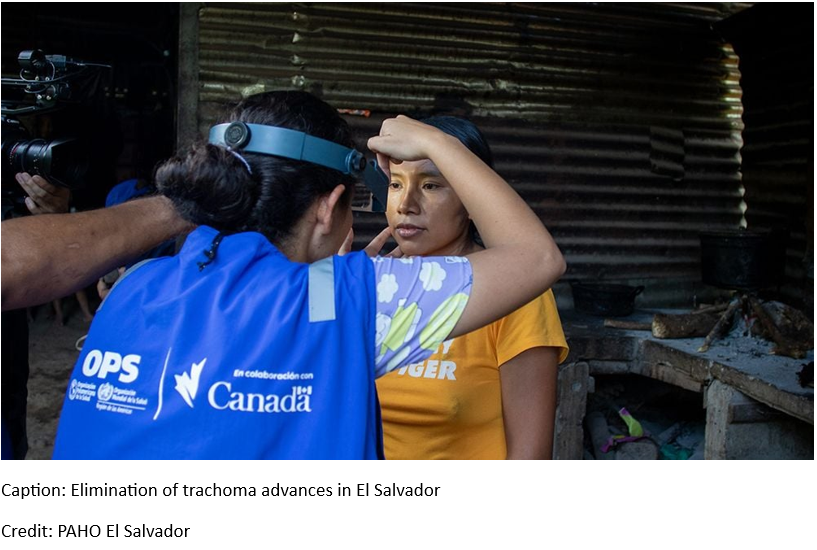
Integrated multidisease service delivery models expanded access in hard-to-reach settings. In Amazon Basin territories in Colombia and other countries, combined interventions for malaria, trachoma, skin-related neglected tropical diseases and ocular health improved access and efficiency by reducing parallel service delivery. Thanks to PAHO’s partnership with the Government of Canada, access to integrated health service delivery for populations living in conditions of vulnerability was strengthened to accelerate the elimination of trachoma and other diseases in Bolivia, Brazil, Colombia, Ecuador, El Salvador, Guatemala, Mexico, and Venezuela.
 By the end of the biennium, 4 countries had launched integrated multidisease elimination plans; 7 were developing such plans; and 14 were implementing accelerated disease elimination strategies, reflecting growing political commitment. The Zero AIDS Deaths by 2030 initiative, supported by Unitaid, catalyzed regional momentum and expanded to 22 countries in Latin America and the Caribbean. In 2025, PAHO launched the Alliance for the Elimination of HIV in the Americas.
Best buys for each disease and condition under the Disease Elimination Initiative were published by PAHO and are being used to advocate for evidence-based investments to accelerate elimination. In addition, the regional data portal and monitoring and action framework were published to track indicators, identify gaps, and guide priority actions toward multidisease elimination.
Immunization coverage recovered and sustained despite measles setbacks
Restoring and sustaining immunization coverage after pandemic-related disruptions was a major achievement of the 2024–2025 biennium. By 2024, immunization coverage for most antigens had recovered to between 84–90% across the Region, surpassing prepandemic levels for several indicators. Between 2023 and 2024, coverage increased for rotavirus, pneumococcal, measles-containing, and hepatitis B vaccines.
According to WHO/UNICEF estimates, the Region of the Americas continued to lead globally in post-pandemic immunization recovery, having surpassed 2019 levels in key vaccination indicators. The Region remained free of wild poliovirus and circulating vaccine-derived poliovirus, and sustained the elimination of rubella, congenital rubella syndrome, and tetanus. These achievements include more than three decades free of polio.
Although the Region lost measles elimination certification due to a prolonged outbreak , with support from PAHO countries reinforced routine immunization services, strengthened catch-up and follow-up campaigns, enhanced surveillance and outbreak response capacities to prevent wider resurgence, and strengthened surveillance systems to sustain gains and address renewed transmission risks.
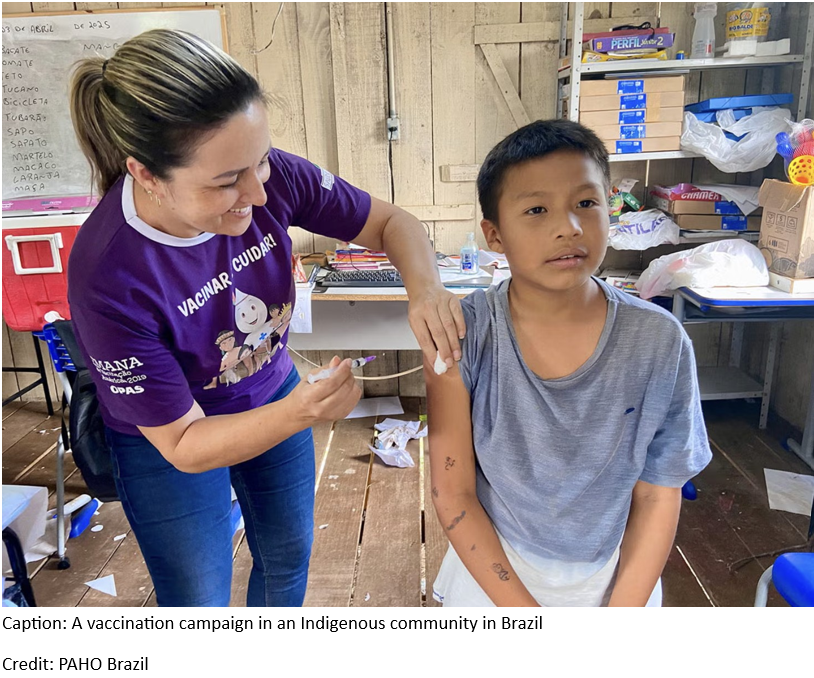 During the biennium, progress was made toward the elimination of vaccine-preventable diseases. The Region continued to lead globally in human papillomavirus (HPV) vaccination efforts, achieving 76% coverage among girls aged under 15 years. With support from PAHO and the Gavi, the Vaccine Alliance, Cuba introduced HPV vaccination in 2025, bringing the total number of countries and territories in the Region with HPV vaccination included in national schedules to 49 of 51. Twenty-nine countries transitioned to single-dose HPV schedules, thereby expanding coverage while improving program efficiency. Surveillance performance also improved, with all core measles–rubella surveillance indicators meeting regional targets, even as countries responded to renewed measles transmission.
Overall, the biennium marked a transition from recovery toward more resilient and integrated immunization systems capable of sustaining high coverage and supporting elimination goals. However, persistent gaps remained among marginalized and vaccine-hesitant populations. Countries increasingly used disaggregated data and community-based strategies to improve reach among these groups.
The Bureau's technical cooperation reinforced countries’ capacity to prevent, detect, and respond to communicable diseases, contributing to achievements such as the following:
The Zero AIDS deaths by 2030 initiative, supported by PAHO and Unitaid, expanded from 11 to 22 countries, catalyzing regional momentum to prevent and advance HIV response. With PASB’s support, the Plurinational State of Bolivia initiated and Belize, Brazil, Colombia, Cuba, Dominican Republic, Ecuador, El Salvador, Guatemala, Panama, and Paraguay expanded pre-exposure prophylaxis (PrEP) as part of comprehensive HIV prevention strategies, including the application of the PrEP Impact Tool to support evidence-informed target setting, prioritization, and monitoring of progress toward reducing new HIV infections.
Access to innovative vector surveillance and control was expanded in 18 countries through capacity-building for mass mosquito production platforms, enabling suppression or replacement of Aedes aegypti populations using sterile or Wolbachia‑infected mosquitoes. To enhance regional capacity for vector-borne disease control, PAHO updated the integrated management strategy for arboviral diseases (2026–2035), providing a coherent framework to guide national strategies and harmonize priorities to address endemic and emerging arboviral diseases.
Integrated, multi-disease service delivery models of care expanded access in remote settings. In Amazon basin territories in Colombia and other countries, combined interventions for malaria, trachoma, skin neglected tropical diseases, and ocular health improved access and efficiency by reducing parallel service delivery.
Routine immunization recovered across the Region, with 2024 coverage for most antigens reaching 84–90%, year‑on‑year increases for multiple vaccines, a testament to the sustained efforts of Member States and PASB’s technical cooperation. WHO/UNICEF estimates highlighted that the Americas was the only WHO region where key vaccination indicators surpassed their 2019 levels.
Cervical cancer prevention moved ahead in Cuba through the introduction of human papillomavirus (HPV) vaccination in 2025, thanks to PAHO’s collaboration with countries and partners. This brings the number of countries and territories adopting HPV vaccination to 49 of 51. In addition, 29 countries and territories have adopted a single-dose schedule, which significantly increases coverage.
Despite these results, the following challenges constrained implementation, scale, and sustainability:
Limited and unpredictable funding for integrated, multi-disease approaches affected the sustainability of initiatives.
Insufficient country capacity, regulatory and patent barriers, under‑resourced laboratory and cross‑cutting systems, competing national priorities, financing, and underuse of advanced technologies challenged efforts to reorient health services toward integrated first‑level care and slowed implementation of best buy interventions promoted by PAHO. This includes uptake of the new strategic health supplies for tuberculosis, HIV, viral hepatitis, and sexually transmitted infections (STIs).
Shifts in public confidence in institutions posed challenges to the implementation of effective public health strategies, including vaccination.
The Bureau supported countries in advancing multisectoral action on communicable disease risk factors, contributing to the following measurable achievements in antimicrobial resistance (AMR), food safety, and zoonotic disease prevention:
Antimicrobial resistance surveillance and laboratory capacity was improved with 17 laboratories in Barbados, Belize, Dominica, Grenada, Guyana, Jamaica, Saint Lucia, Saint Vincent and the Grenadines, and Suriname updated with advanced technologies, enabling faster diagnostics, stronger isolate-level surveillance, and improved clinical decision-making. As an example of country-level progress, the Bahamas institutionalized infection prevention and control and AMR action through a national roadmap, workforce training, and One Health coordination.
Thirteen countries reported participation of communities in responding to HIV, tuberculosis, STIs, and viral hepatitis, an increase of three since 2023. Community engagement on these diseases, as well as AMR and meningitis, was expanded with PASB’s support to increase demand for differentiated models of services and promote community‑led awareness and policy dialogue.
The Plurinational State of Bolivia, Guatemala, Honduras, Nicaragua, and Paraguay strengthened food safety systems for improved detection, reporting, and response to foodborne risks and institutional coordination among public health and food control agencies and laboratories. This capacity-building was reinforced through the International Food Safety Authorities Network (INFOSAN) and the Inter-American Network of Food Analysis Laboratories (INFAL) exchanges between laboratories to test their capacities.
Regional preparedness for zoonotic diseases and envenoming was reinforced through approaches recognizing the interconnectedness of human, animal, and environmental health, strengthened surveillance and automated reporting, updated technical guidance, and expanded laboratory and antivenom production capacity, reaching thousands of professionals with multisectoral training.
The regional endemic area with interrupted vector-borne transmission of Chagas disease expanded through the accreditation of five new states across two provinces in Argentina. Nine countries and territories in the Amazon region approved a 2026–2031 strategic plan for a comprehensive approach to Chagas disease. In support of these achievements, PASB developed guidance, tools, and monitoring mechanisms promoting comprehensive approaches to addressing water, sanitation, and hygiene (WASH)-related risk factors for neglected diseases.
Several challenges negatively impacted the reach and effectiveness of risk reduction efforts:
There was insufficient application of integrated approaches recognizing human, animal, and environmental health linkages, limiting comprehensive risk management.
Persistent gaps in data interoperability and laboratory capacity constrained timely analysis, evidence‑based decision‑making, and coordinated response, increasing the need for better use of shared tools, such as dashboards, automated reporting, and guideline mapping.
Expansion of tailored, community-led, and multisectoral approaches was insufficient to achieve full territorial coverage of interventions in some countries, particularly in remote and underserved areas, with limited population-level impact.
Lack of mechanisms for civil society participation hindered continuity and scale of community-based action to reduce risk factors.
Through coordinated technical cooperation, PASB worked with countries and territories to accelerate progress toward disease elimination, delivering high-impact achievements such as the following:
Elimination of malaria continued to advance across the Region, including achievement of WHO certification of Suriname as the first Amazonian country to interrupt transmission and prevent re-establishment. PASB supported Suriname in enhancing surveillance and response systems to build post elimination capacity to prevent reestablishment. To date, 20 countries in the Region have eliminated malaria.
Belize, Jamaica, and Saint Vincent and the Grenadines eliminated mother-to-child transmission of HIV and syphilis bringing the total to 11 countries that have achieved this milestone. Brazil achieved the elimination of mother-to-child transmission of HIV, while The Bahamas and Barbados, and Turks and Caicos advanced through validation processes for mother-to-child transmission of these diseases. In addition to supporting countries in the validation process, PASB provided technical cooperation to increase coverage of antenatal care, HIV testing, and treatment for pregnant women and infants.
Brazil eliminated lymphatic filariasis, and the Plurinational State of Bolivia, and Brazil, were declared free of foot-and-mouth disease in bovids without vaccination. Chile progressed toward elimination of leprosy, and multiple countries advanced elimination dossiers for neglected tropical diseases. Mexico completed a hepatitis C pre-elimination assessment and defined a national roadmap to close gaps and advance elimination. Brazil, Colombia, and El Salvador advanced multisectoral collaboration to establish bacterial meningitis elimination as a public health priority. In addition, schistosomiasis surveys were conducted in Puerto Rico and Saint Lucia, and a roadmap for interrupting transmission in the Caribbean was developed.
The Plurinational State of Bolivia, Brazil, Colombia, Ecuador, El Salvador, Guatemala, Mexico, and the Bolivarian Republic of Venezuela implemented interventions with support from PASB to accelerate the elimination of trachoma and other neglected diseases.
The Region sustained elimination of wild poliovirus, rubella, congenital rubella syndrome, and tetanus. Surveillance performance was strengthened, with all core measles—rubella surveillance indicators meeting regional targets, even as countries responded to renewed measles transmission. PASB’s efforts supported expanded use of microplanning and geographical information system assisted methods, ensuring timely outbreak response and preventive vaccination strategies.
Fourteen countries are now implementing accelerated elimination strategies, four countries launched multi-disease elimination plans, and another seven are advancing toward this, reflecting a major scaling up of the PAHO Disease Elimination initiative.
These gains remain vulnerable due to the following challenges:
Elimination gains remain at risk due to service disruptions, particularly in contexts with dispersed and mobile populations. Moreover, persistent gaps in access to interventions continue to limit reach among populations in situations of vulnerability, undermining achievement of elimination goals. These gaps can be overcome by leveraging proven interventions such as rapid diagnostic tests for malaria and recent technological advances, such as mHealth solutions.
Gaps in surveillance sensitivity, data quality, and interoperability constrain timely detection of transmission, monitoring of progress, and validation of elimination achievements.
Incomplete integration of elimination actions within PHC, service networks, and intersectoral approaches limits sustainability, scale‑up, and effective implementation across the continuum of care.
* Countries and territories that did not complete the assessment or for which there was no consensus on the assessment results are not reflected in the final ratings for the indicator.