| Indicator assessment Outcomes | Indicator assessment Outputs | Approved Budget 24-25 US$ M | % Funds Available vs PB | % Implementation funds available |
|
|---|---|---|---|---|---|
| 23. Health emergencies preparedness and risk reduction | 39.4 | 61% | 99% | ||
| 39.4 | 61% | 99% | |||
| 39.4 | 61% | 99% | |||
| 39.4 | 61% | 99% | |||
| 39.4 | 61% | 99% | |||
| 39.4 | 61% | 99% | |||
| 39.4 | 61% | 99% | |||
| 39.4 | 61% | 99% | |||
| 39.4 | 61% | 99% | |||
| 39.4 | 61% | 99% | |||
| 39.4 | 61% | 99% | |||
| 39.4 | 61% | 99% | |||
| 39.4 | 61% | 99% | |||
| 39.4 | 61% | 99% | |||
| 39.4 | 61% | 99% | |||
| 39.4 | 61% | 99% | |||
| 39.4 | 61% | 99% | |||
| 39.4 | 61% | 99% | |||
| 39.4 | 61% | 99% | |||
| 39.4 | 61% | 99% | |||
| 39.4 | 61% | 99% | |||
| 39.4 | 61% | 99% | |||
| 39.4 | 61% | 99% | |||
| 39.4 | 61% | 99% | |||
| 39.4 | 61% | 99% | |||
| 39.4 | 61% | 99% | |||
| 39.4 | 61% | 99% | |||
| 39.4 | 61% | 99% | |||
| 39.4 | 61% | 99% | |||
| 39.4 | 61% | 99% | |||
| 39.4 | 61% | 99% | |||
| 39.4 | 61% | 99% | |||
| 24. Epidemic and pandemic prevention and control | 38.4 | 81% | 99% | ||
| 38.4 | 81% | 99% | |||
| 38.4 | 81% | 99% | |||
| 38.4 | 81% | 99% | |||
| 38.4 | 81% | 99% | |||
| 38.4 | 81% | 99% | |||
| 38.4 | 81% | 99% | |||
| 38.4 | 81% | 99% | |||
| 38.4 | 81% | 99% | |||
| 38.4 | 81% | 99% | |||
| 38.4 | 81% | 99% | |||
| 38.4 | 81% | 99% | |||
| 38.4 | 81% | 99% | |||
| 38.4 | 81% | 99% | |||
| 38.4 | 81% | 99% | |||
| 38.4 | 81% | 99% | |||
| 38.4 | 81% | 99% | |||
| 38.4 | 81% | 99% | |||
| 38.4 | 81% | 99% | |||
| 38.4 | 81% | 99% | |||
| 38.4 | 81% | 99% | |||
| 38.4 | 81% | 99% | |||
| 38.4 | 81% | 99% | |||
| 38.4 | 81% | 99% | |||
| 25. Health emergencies detection and response | 29.0 | 55% | 97% | ||
| 29.0 | 55% | 97% | |||
| 29.0 | 55% | 97% | |||
| 29.0 | 55% | 97% | |||
| 29.0 | 55% | 97% | |||
| 29.0 | 55% | 97% | |||
| 29.0 | 55% | 97% | |||
| 29.0 | 55% | 97% | |||
| 29.0 | 55% | 97% | |||
| 29.0 | 55% | 97% | |||
| 29.0 | 55% | 97% | |||
| 29.0 | 55% | 97% | |||
| 29.0 | 55% | 97% | |||
| 29.0 | 55% | 97% | |||
| 29.0 | 55% | 97% | |||
| 29.0 | 55% | 97% | |||
| 29.0 | 55% | 97% | |||
| 29.0 | 55% | 97% | |||
| 29.0 | 55% | 97% | |||
| 29.0 | 55% | 97% | |||
| 29.0 | 55% | 97% | |||
| 29.0 | 55% | 97% | |||
| 29.0 | 55% | 97% | |||
| 29.0 | 55% | 97% | |||
| 29.0 | 55% | 97% | |||
| 29.0 | 55% | 97% | |||
| 29.0 | 55% | 97% | |||
| 29.0 | 55% | 97% |
Regional health security strengthened through integrated emergency preparedness and response
During the 2024–2025 biennium, countries in the Americas strengthened emergency preparedness and response as core public health functions, enhancing their capacity to anticipate, manage, and respond to health emergencies. PAHO supported the institutionalization of integrated systems linking preparedness planning, surveillance, epidemic intelligence, risk assessment, and response operations – moving countries beyond ad hoc emergency action toward routine, system-embedded health security capacities.
Preparedness capacities were bolstered through strengthened laboratory, genomic, and surveillance systems, including the decentralization of diagnostic capacity to subnational and border areas. Countries advanced integrated approaches combining indicator-based surveillance, event-based surveillance, and epidemic intelligence, supported by risk assessment and preparedness planning. Under an approach that recognizes the interconnectedness of human, animal, and environmental health, integrated epizootic surveillance enhanced early warning for zoonotic threats and informed anticipatory preparedness measures. In Bolivia, Colombia, and Ecuador, strengthened epizootic surveillance enabled earlier detection of yellow fever virus circulation, allowing preventive actions that reduced the risk of urban transmission.
 In line with the Regional Action Plan for Epidemic Intelligence, preparedness was further strengthened through standardized information exchange between laboratories and International Health Regulations (IHR) National Focal Points, improving detection-to-notification timelines and readiness to activate response mechanisms. Several countries began applying structured timeliness metrics across detection, notification, and response, strengthening preparedness monitoring, operational accountability, and performance management under health security frameworks.
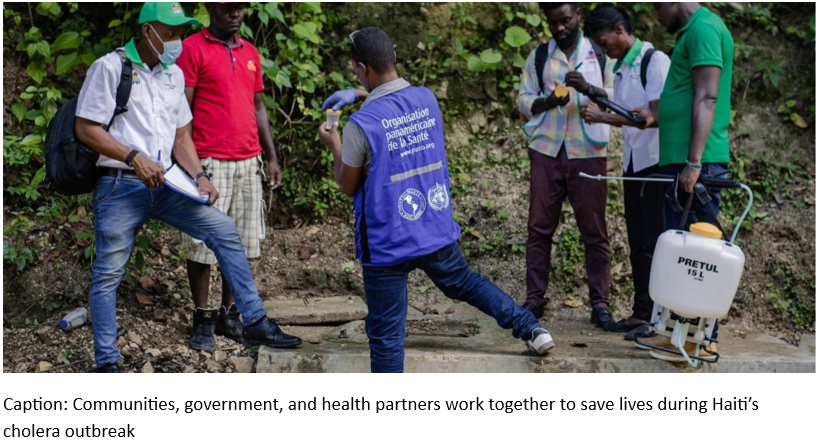
Preparedness investments translated into measurably stronger response performance during major emergencies across the Region. In Jamaica, preparedness investments were put to the test during Hurricane Melissa, where strengthened health emergency operations, trained personnel, and resilient health facilities enabled faster mobilization, improved coordination, and continuity of essential health services despite widespread damage. In Haiti, PAHO supported sustained emergency response to cholera and complex humanitarian conditions, reinforcing surveillance, response coordination, and continuity of public health operations amid a protracted crisis. In Venezuela, emergency response capacities were sustained through coordinated, cross-organizational mechanisms that enabled continued implementation of priority emergency interventions despite prolonged operational constraints.
By embedding preparedness and response capacities within health systems, the biennium marked a shift toward more resilient, responsive, and sustainable health security capacities across the Americas.
The Bureau worked with national authorities and other stakeholders to strengthen national and regional preparedness, risk reduction and response capacities, contributing to achievements such as the following:
All 35 States Parties completed the IHR States Parties Self-Assessment Annual Report for a third consecutive year, and eight countries (Brazil, Colombia, Costa Rica, El Salvador, Nicaragua, Panama, Paraguay, and Uruguay) applied early warning timeliness metrics (7‑1‑7). Brazil and Honduras (with support from the Pandemic Fund) completed their first voluntary external evaluations of core capacities under the IHR (2005).
Caribbean countries’ protection against cross‑border health threats was enhanced with strengthening of early detection and response capacities at points of entry through standardized airport and port assessments and targeted capacity building, including regional ship inspection and sanitation certification.
Countries made critical advances in health emergency preparedness. For example, in Chile, a review of the institutional structure led to the creation of a new division aimed at strengthening preparedness and response capacities, providing a model for countries undertaking similar reforms. Peru strengthened national preparedness and response capacities through updated health situation analyses, intersectoral coordination, and capacity building for outbreaks and chemical emergencies, improving operational readiness and continuity of care in complex emergency and humanitarian contexts.
Smart Hospitals kept essential health services running during Hurricane Melissa, as retrofits in Jamaica enabled three facilities to remain operational or rapidly resume services during a Category 5 hurricane, sustaining essential care for catchment populations of up to 20,000 people despite widespread infrastructure failure. Over the past five years, 12 facilities in Jamaica were retrofitted through the initiative, including four upgraded to gold standards.
The Region advanced classification of national emergency medical teams (EMTs), with 19 countries now applying EMT standards. EMTs in four countries (Colombia, Costa Rica, Dominican Republic, and Panama) achieved or renewed Type 1 status, while mobile hospitals in Ecuador renewed Type 2 status, and Mexico advanced toward Type 2 status, strengthening readiness for large‑scale health emergencies.
Despite these gains, the following challenges limited depth and sustainability:
Preparedness capacities remained uneven across countries and subnational levels, reflecting disparities in institutional maturity, workforce availability, and financing and increasing the importance of refocusing efforts on sustaining core preparedness capacities, especially in contexts of highest risk and vulnerability.
Weaknesses in information systems and logistics planning reduced the reliability of readiness assessments and delayed the operationalization of preparedness plans.
The Bureau's technical cooperation strengthened prevention and control capacities, contributing to the following achievements:
Twenty-five countries strengthened their surveillance systems for priority and emerging pathogens, with PASB promoting measures to expand molecular diagnostics, sequencing, and mortality monitoring, and enable earlier detection and improved epidemic intelligence for dengue, yellow fever, influenza, respiratory syncytial virus (RSV), Oropouche, and chikungunya. As an example of country-level progress, Mexico strengthened genomic surveillance capacity, consolidating an integrated platform for early detection and response to public health threats, leading to improved health security and system resilience.
Twelve countries updated preparedness plans in line with an approach recognizing the interconnectedness of human, animal, and environmental health. Yellow fever surveillance was significantly reinforced through the implementation and expansion of epizootic surveillance systems, notably in Plurinational State of Bolivia, Colombia, and Ecuador.
Costa Rica, Dominican Republic, Guatemala, and Honduras updated risk communication and community engagement (RCCE) strategies to improve preparedness, and five countries (Belize, Colombia, Costa Rica, Panama, and Suriname) enhanced RCCE coordination, resulting in improved SPAR scores in 2024. Clinical management and infection prevention capacities were reinforced through large‑scale training and regionally developed guidance, including the first regional RSV clinical management guidelines.
Persistent challenges related to epidemic and pandemic prevention and control include:
Timely and complete reporting for all priority pathogens remains uneven, with delays, incomplete epidemiological and laboratory data, and limited integration across surveillance components constraining real‑time situational awareness.
Multisectoral collaboration and subnational capacity remain fragile, limiting full integration of prevention, detection, and response functions, especially at border and decentralized levels.
The Bureau's operational coordination and technical cooperation strengthened countries’ ability to manage emergencies, contributing to achievements in detection, response, and service continuity such as the following:
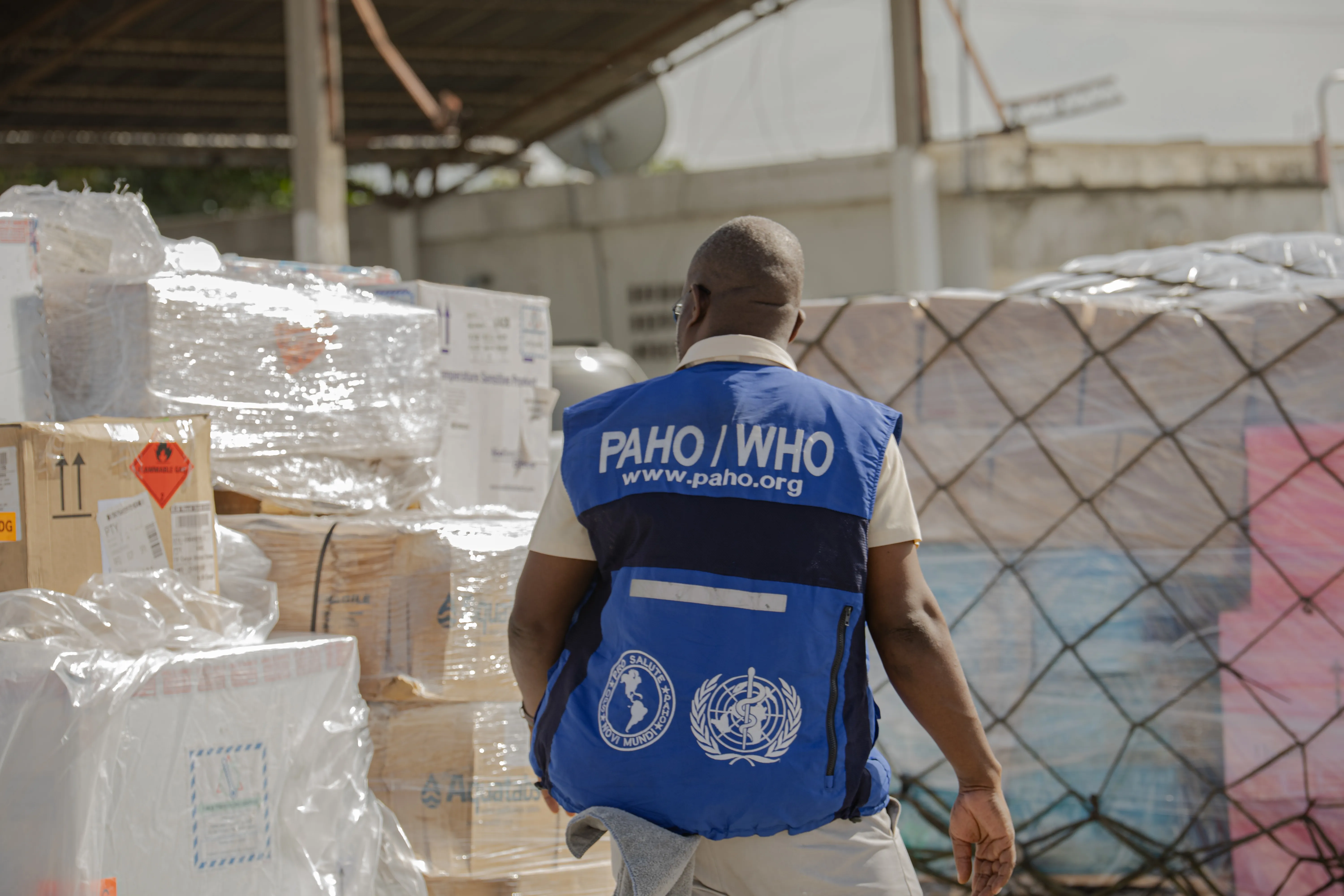
The Bureau responded to 24 acute and protracted health emergencies during the biennium, enabling rapid deployment of expertise, activation of incident management systems, and delivery of 141 shipments totaling over 36 tons of essential supplies to 34 countries and territories, supporting countries to deliver an essential package of life-saving health services in all graded emergencies during the biennium.
Support during protracted emergencies safeguarded service continuity for affected populations, including access to essential health services for over 140 000 people in the Bolivarian Republic of Venezuela and more than 800 000 health consultations in Cuba through anticipatory action, prepositioning, and coordinated humanitarian health assistance. Haiti’s main public referral hospital in Port‑au‑Prince maintained continuous emergency and obstetric care, despite severe insecurity, delivering free emergency services to over 41 000 patients and lifesaving caesarean sections to more than 2900 women, including internally displaced persons and other groups in situations of vulnerability.
During the biennium, PAHO's surveillance system analyzed 4.4 million signals from multiple sources. This process, combined with 167 events officially reported by National IHR Focal Points, resulted in the detection of 307 public health events. PASB also completed risk assessments for 100% of acute public health events within 72 hours. This is a key measure of organizational capacity to identify and assess public health events of potential international concern, as well as the success of its support to States Parties to build detection and assessment capacity. Epidemic intelligence accelerated during the biennium through the Strategy on Epidemic Intelligence for early warning of health emergencies, with important gains made in identifying institutional capacities, gaps, and good practices in field epidemiology.
The Region developed and agreed on a protocol to accelerate information exchange between national public health laboratories and national IHR focal points. PASB supported this Member State-driven process, which positions the Region as a global pioneer in integrated, trust-based information-sharing for decision-making.
Emergency operations increasingly integrated continuity of routine services, including emergency and obstetric care, surveillance, WASH, mental health, and vector control, contributing to reduced indirect morbidity and mortality during crises.
However, several challenges continued to affect performance and sustainability:
Persistent violence and social unrest disrupted access to essential health services and supply chains in many countries, increasing operational costs and delaying planned activities while raising demand for urgent care.
Protracted emergencies placed sustained strain on personnel capacity, with safety risks and difficulties in recruitment and deployment affecting the continuity and scale of technical assistance.
Delays in the availability of emergency financing constrained rapid implementation within short emergency timeframes and compressed procurement planning, highlighting the need for more predictable and timely financial flows for emergency response operations.
* Countries and territories that did not complete the assessment or for which there was no consensus on the assessment results are not reflected in the final ratings for the indicator.