| Indicator assessment Outcomes | Indicator assessment Outputs | Approved Budget 24-25 US$ M | % Funds Available vs PB | % Implementation funds available |
|
|---|---|---|---|---|---|
| 27. Leadership and governance | 81.4 | 121% | 98% | ||
| 81.4 | 121% | 98% | |||
| 81.4 | 121% | 98% | |||
| 81.4 | 121% | 98% | |||
| 81.4 | 121% | 98% | |||
| 81.4 | 121% | 98% | |||
| 81.4 | 121% | 98% | |||
| 81.4 | 121% | 98% | |||
| 81.4 | 121% | 98% | |||
| 81.4 | 121% | 98% | |||
| 81.4 | 121% | 98% | |||
| 81.4 | 121% | 98% | |||
| 81.4 | 121% | 98% | |||
| 81.4 | 121% | 98% | |||
| 81.4 | 121% | 98% | |||
| 81.4 | 121% | 98% | |||
| 81.4 | 121% | 98% | |||
| 81.4 | 121% | 98% | |||
| 81.4 | 121% | 98% | |||
| 81.4 | 121% | 98% | |||
| 81.4 | 121% | 98% | |||
| 81.4 | 121% | 98% | |||
| 81.4 | 121% | 98% | |||
| 81.4 | 121% | 98% | |||
| 81.4 | 121% | 98% | |||
| 81.4 | 121% | 98% | |||
| 81.4 | 121% | 98% | |||
| 81.4 | 121% | 98% | |||
| 81.4 | 121% | 98% | |||
| 81.4 | 121% | 98% | |||
| 81.4 | 121% | 98% | |||
| 81.4 | 121% | 98% | |||
| 81.4 | 121% | 98% | |||
| 81.4 | 121% | 98% | |||
| 81.4 | 121% | 98% | |||
| 81.4 | 121% | 98% | |||
| 81.4 | 121% | 98% | |||
| 81.4 | 121% | 98% | |||
| 81.4 | 121% | 98% | |||
| 81.4 | 121% | 98% | |||
| 81.4 | 121% | 98% | |||
| 81.4 | 121% | 98% | |||
| 81.4 | 121% | 98% | |||
| 81.4 | 121% | 98% | |||
| 81.4 | 121% | 98% | |||
| 81.4 | 121% | 98% | |||
| 81.4 | 121% | 98% | |||
| 81.4 | 121% | 98% | |||
| 81.4 | 121% | 98% | |||
| 81.4 | 121% | 98% | |||
| 81.4 | 121% | 98% | |||
| 81.4 | 121% | 98% | |||
| 81.4 | 121% | 98% | |||
| 81.4 | 121% | 98% | |||
| 81.4 | 121% | 98% | |||
| 81.4 | 121% | 98% | |||
| 81.4 | 121% | 98% | |||
| 81.4 | 121% | 98% | |||
| 28. Management and administration | 98.5 | 115% | 95% | ||
| 98.5 | 115% | 95% | |||
| 98.5 | 115% | 95% | |||
| 98.5 | 115% | 95% | |||
| 98.5 | 115% | 95% | |||
| 98.5 | 115% | 95% | |||
| 98.5 | 115% | 95% | |||
| 98.5 | 115% | 95% | |||
| 98.5 | 115% | 95% | |||
| 98.5 | 115% | 95% | |||
| 98.5 | 115% | 95% | |||
| 98.5 | 115% | 95% | |||
| 98.5 | 115% | 95% | |||
| 98.5 | 115% | 95% | |||
| 98.5 | 115% | 95% | |||
| 98.5 | 115% | 95% | |||
| 98.5 | 115% | 95% | |||
| 98.5 | 115% | 95% |
Strategic partnerships expanded and multiplied PAHO’s health impact across the Americas
During the 2024–2025 biennium, PAHO significantly expanded its political engagement and partnerships through sustained participation in high-level global and regional forums, strengthening its visibility and influence with governments, multilateral institutions, and non-State actors. Strategic engagement by PAHO reached a historic milestone during this biennium, featuring a record 50 events at the United Nations General Assembly, alongside targeted bilateral meetings with key partners. Furthermore, PAHO maintained a robust global presence by participating in 49 additional high-level international events.
As a result of strengthened strategic relationships, PAHO’s voluntary contribution resource mobilization reached USD 552 million during the reporting period, reflecting increased partner confidence despite a broader decline in global development assistance for health. The Organization also expanded its partner base, increasing the number of financial partners from 18 to 30 and securing new and strengthened collaborations with governments, multilateral actors, and foundations.
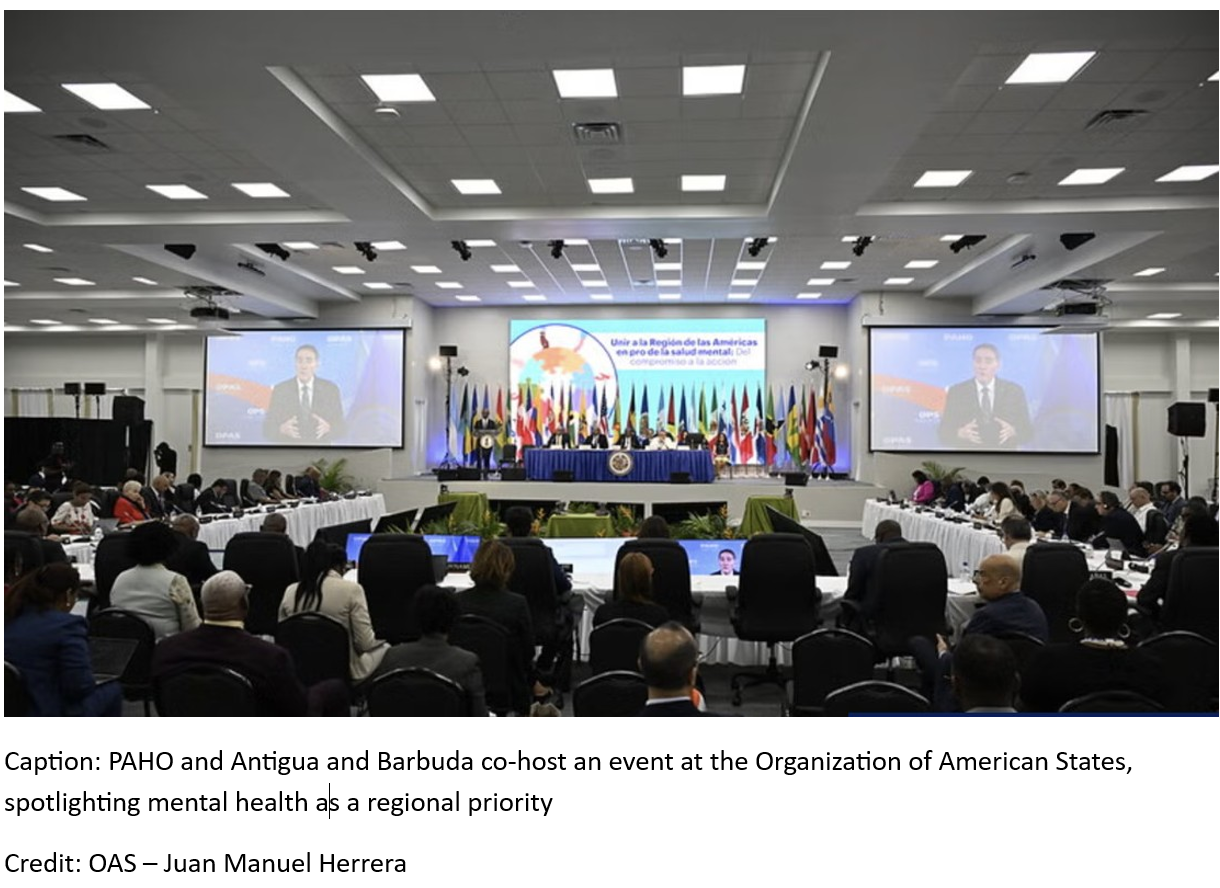 These partnerships were a critical enabler of results across the Region, expanding the scale, coherence, and sustainability of health actions aligned with national priorities and regional mandates. Collaboration with international financial institutions supported the transition from policy dialogue to implementation, particularly for noncommunicable diseases, primary health care–centered reforms, and digital transformation, ensuring that financing translated into tangible system improvements.
Moreover, partnerships played a central role in advancing disease elimination, immunization recovery, emergency preparedness, and regional production of health technologies. Collaboration with bilateral partners, global initiatives, and foundations supported access to vaccines, medicines, and diagnostics while strengthening regional self-reliance and supply security. In emergency contexts, coordinated partnerships enabled rapid mobilization of expertise and resources, protecting essential services and saving lives.
Expanded political engagement and strategic partnerships strengthened PAHO’s partnership ecosystem and financing base, enhancing the conditions for effective technical cooperation and sustained delivery of results across the Americas.
PAHO’s normative leadership, convening power, and political engagement strengthened collective decision-making and regional coherence, contributing to several achievements:
Approval of the SP 26-31, the PAHO Program Budget 2026–2027, and 24 resolutions translated strategic priorities into aligned policy frameworks to guide technical cooperation.
PAHO’s country focus was strengthened through integrated country and subregional cooperation strategies, with 13 new country cooperation strategies signed during the biennium, bringing the total to 25 active strategies covering 35 countries and territories, alongside three newly signed subregional strategies.
Sustained high‑level political engagement expanded the Organization’s visibility and influence, including participation during the biennium in a historic high of 50 events at the United Nations General Assembly and in 49 additional high-level international events, such as the G20, strengthening collective decision‑making and partnerships. Expanded partnerships translated into financing, with voluntary contributions reaching $552 million during the reporting period (some going beyond the biennium) and the number of financial partners increasing by 30, reinforcing the resource base for priority initiatives.
Strategic communications were modernized through strengthened media engagement, new multimedia products, and standardized country reporting, resulting in increased digital user engagement and improved visibility of country‑level results.
Accountability and oversight functions were strengthened through a revamped Internal Control Framework, a mature enterprise risk management system, and reinforced evaluation and learning. Organizational integrity was reinforced, with 95% staff compliance in the required prevention of sexual exploitation and abuse training.
At the same time, the following challenges affected implementation:
- External political and financing uncertainties required intensified health diplomacy and partnership engagement.
- Misalignment between earmarked funding and agreed programmatic priorities limited the ability to resource high‑priority outcomes in a predictable and flexible manner.
The Bureau's stewardship of management and administration functions strengthened performance and helped to navigate financial challenges with prudent and responsible management, contributing to achievements such as the following:
After completing the first two cycles – PAHO Forward 1.0 (2023–2024) and PAHO Forward 2.0 (2024–2025) – the initiative has achieved 86% expected results (131 of 151), demonstrating sustained institutional commitment to continuous improvement.
Improved cash management and competitive foreign exchange transactions generated $7.3 million in additional savings between April 2024 and November 2025 – resources now available for health programs. PAHO achieved an unqualified audit opinion during 2024 and 2025, implemented a new Chart of Accounts, and automated reporting, supporting transparent and predictable stewardship of resources.
Human resources modernization strengthened institutional capacity and workforce engagement through the launch of People Strategy 3.0 during 2025 and improvements to recruitment, performance management, and employee experience.
Investments in digital transformation strengthened system reliability, data visibility, and protection of corporate assets through workflow automation, integrated financial systems, strengthened cloud and cybersecurity governance, and security upgrades.
Operational continuity and efficiency were improved through updated operating models, standardized procedures, use of key performance indicators, capital project execution, real estate transitions, and expanded use of digital solutions such as e‑Signature.
Despite this progress, challenges continued to constrain efficiency and scalability, such as:
Emergency‑driven workloads, capacity limitations, and uneven adoption of standardized and digital solutions limited the full embedding of new ways of working.
* Countries and territories that did not complete the assessment or for which there was no consensus on the assessment results are not reflected in the final ratings for the indicator.