* Since the last assessment in 2024, updated information became available that required a change in the baseline.
EOB 2024-2025
IMPACT INDICATOR

Mortality rate due to cervical cancer
Baseline
2015
6.27 deaths per 100 000 female population*
Target
2025
4.6 deaths per 100 000 female population
Status
2021
5.95 deaths per 100 000 female population
Rating
Stagnating
% annual change required to achieve target
-4.01%
% annual change recorded as of last year available
-0.78%
Cervical cancer represents a major public health challenge across the entire continuum of comprehensive cancer care, characterized by high incidence and profound disparities driven by the unequal distribution of social determinants of health and access to health services. Mortality from cervical cancer is considered amenable to healthcare and therefore avoidable, and remains an important focus of PAHO’s Better Care for NCDs initiative and Disease Elimination Initiative.
Long-term trends for this indicator show an overall steady reduction of 23% between 2000 and the baseline year of 2015, declining from 8.1 to 6.3 deaths per 100 000 female population, equivalent to an average annual reduction of -1.7%. Between 2015 and the most recent year for which data are available (2021), however, the pace of decline slowed by half to 0.9%, resulting in a rate of 6.0 deaths per 100 000 female population. The projected rate for 2025 is 5.6 deaths per 100 000 female population, remaining almost 30% above the target. Therefore, progress on this indicator is considered to be stagnating.
Although the target was not achieved due to the effects of the COVID-19 pandemic on health systems, as well as differing levels of maturity of policies and interventions to reduce the burden of cervical cancer across the Region, further progress on this indicator can be achieved through the implementation of effective strategies. Cervical cancer is largely preventable through vaccination against human papillomavirus (HPV), screening, and treatment of precancerous lesions.
A regional plan of action to prevent and control cervical cancer, with the goal of reducing incidence and mortality by one third by 2030, has been endorsed by countries in the Region in recognition of the potential to eliminate this disease. Reliable, up-to-date population-level cancer data are essential for understanding and monitoring the situation in the Region and for guiding action as this indicator continues to be monitored under the PAHO Strategic Plan 2026–2031.
Recommendations
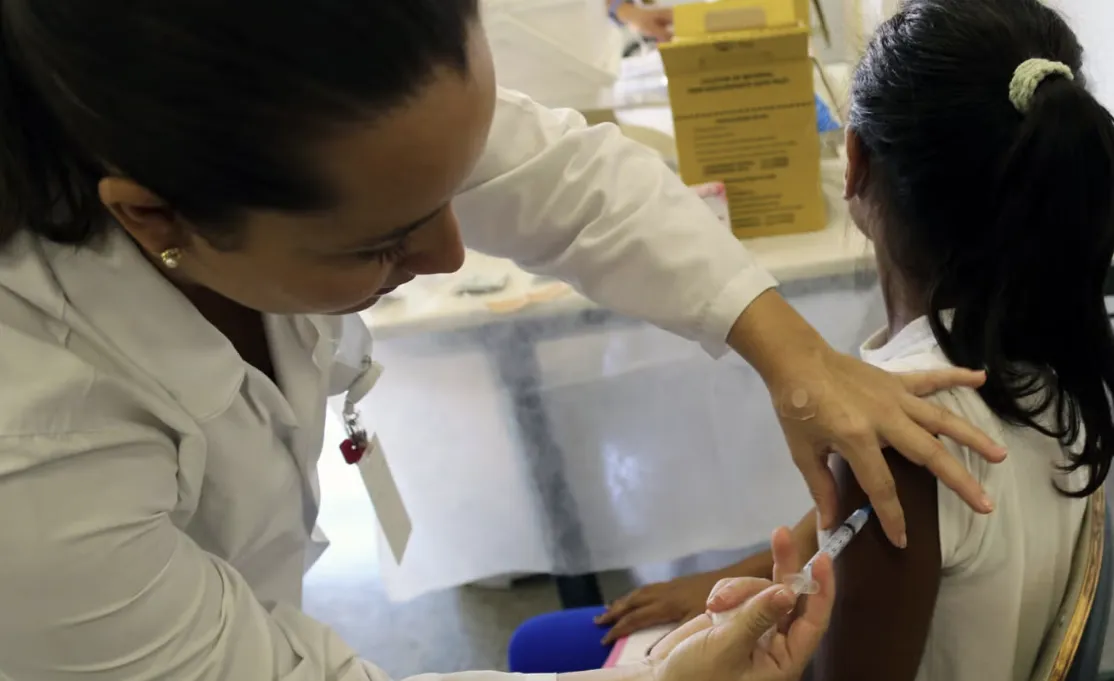
Expand access to HPV vaccination for target populations through national immunization programs in order to prevent HPV infection and ultimately reduce the burden of cervical cancer.
Include HPV testing into population-based screening programs to strengthen the effectiveness of secondary prevention efforts.
Ensure appropriate follow-up and management for women with abnormal screening results.
Strengthen health information systems and cancer surveillance, including through the collection of more disaggregated data, to support the identification and implementation of targeted interventions.