
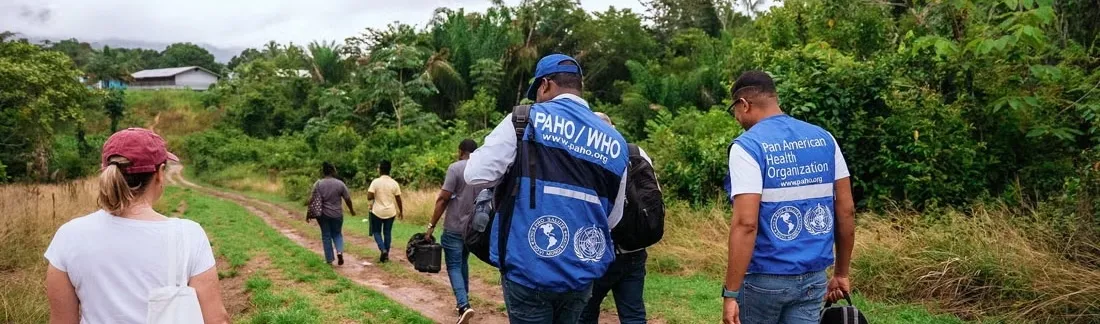
This indicator reflects the commitment of Member States to eliminating malaria transmission in the Region, supported by PAHO’s Disease Elimination Initiative. The indicator complements indicator 21 on the incidence rate of malaria and reflects sustained efforts to interrupt transmission in endemic areas.
By the end of 2025, 5 of the 21 malaria-endemic countries in 2015 had eliminated transmission (Argentina, Belize, El Salvador, Paraguay, and Suriname), including three that were certified between 2020 and 2025 (Belize, El Salvador, and Suriname). Suriname is the first country in the Amazon region to achieve this milestone. Although the Region fell short of the 2025 target of 6 countries, this indicator is considered to be on the right track.
The Region continues to move toward malaria elimination. By the end of 2025, Costa Rica, with a record of only 16 autochthonous cases reported, was the country closest to interrupting transmission. Ecuador, French Guiana, and Mexico have also made significant progress toward interruption of transmission, while country reports documented marked reductions in incidence in the Dominican Republic and a substantial reduction in Plasmodium falciparum transmission in Honduras. As a result, the Central American subregion is closer than ever to eliminating malaria caused by this parasite.
This favorable trajectory reflects sustained country commitment and ongoing technical cooperation by the Bureau and partners under the Plan of Action for Malaria Elimination 2021–2025 and PAHO’s Disease Elimination Initiative. Key efforts have included strengthened surveillance, expanded access to diagnosis and treatment, microstratification, foci-based interventions, and the diagnosis–treatment–investigation–response approach.
Notwithstanding this progress, significant bottlenecks remain. Continued transmission in remote, border, forest, mining, and other hard-to-reach settings; population mobility; and limitations in the timeliness and granularity of surveillance data continue to delay interruption of transmission and the verification of elimination in some endemic countries. Overcoming these challenges will require accelerated efforts as the indicator continues to be monitored under the PAHO Strategic Plan 2026–2031.
Sustain investments in prevention of the reestablishment of malaria in countries that have achieved malaria-free status, while maintaining strong surveillance and rapid response capacity to detect and contain any imported or introduced cases.
Accelerate elimination efforts in remaining endemic countries, particularly those participating in the E-2025 initiative, and territories through targeted implementation of microstratified and foci-based interventions adapted to local transmission dynamics, with emphasis on expanding access to diagnosis and treatment.
Strengthen case-based surveillance, investigation, and response systems to improve the timeliness, completeness, and disaggregation of data, thereby supporting certification-ready documentation and more precise targeting of interventions.
Implement innovations in radical cure interventions for P. vivax, and chemoprevention measures to accelerate elimination of P. falciparum.
Reinforce inter-programmatic, cross-border, intersectoral, and community-based collaboration, particularly in populations that are mobile, remote, or otherwise in situations of vulnerability, in order to address the operational barriers that continue to hinder progress toward elimination.